We talked a few weeks ago about “starting the clap” (blog, podcast), and I wanted to continue the discussion, maybe take it further. Beyond leaving behind competition, let’s crush the scarcity mentality and activate abundance in the entire Body of Christ. It’s not about me, it’s not about you, it’s about SOULS and expanding the kingdom of God! Step one: overcome envy in ministry - and to be honest, overcome envy in life!
What do I mean when I say “scarcity mentality”? Scarcity means “insufficiency or shortness of supply”. Scarcity is the opposite of abundance which is what Christ offers to us (John 10:10). When we adopt a “scarcity mentality”, we adopt a wrong way of thinking that there is not enough to go around, and the downward spiral begins: “if you are winning, it must mean that I am losing”, “if you are loved, it must mean that I am unloved”, “if you are successful, it must mean that I am not successful”. All of that is a lie from the enemy of your soul meant to isolate you and create competition between you and people who are on your team. Makes it impossible for you to “start the clap”.
Even though Christ means for us to live in abundance, it can be hard for some of us to recognize that abundance for one really and truly does mean abundance for all. God is no respecter of persons (Acts 10:34), what He is offering to one He really does offer to all. There is no competition, there is always enough, God’s gifts are abundant.
When we leave the scarcity mentality and truly recognize that the abundant life means abundant life, we realize that all of us can win, and we’ll actually want all of us to win! (And that’s just like God, isn’t it? To actually mean what He says? Make this thing called Christian discipleship easy on us to understand? Don’t overcomplicate, don’t overthink, don’t make this hard: you can celebrate what is happening in others because you recognize that their success doesn’t mean less for you.
Now let’s take the next step: actually desire for others to succeed! Pray for others’ success and see God enlarge their impact—for His glory.
Praying for Others Will Help You Overcome Envy
Praying for someone else’s success shifts our perspective from comparison to collaboration, from scarcity mentality to abundance mentality. Watch this shift: “if you are winning, it must mean that I am winning too - we are on the same team!”. Envy thrives in the space where we focus on what we don’t have, measuring our worth against another’s achievements. When we lift others up in prayer, our hearts align with God’s purposes (and as a side bonus, our own insecurities are diminished in the joy!). Sincere prayer trains us to see blessings as abundant, not scarce. Sincere prayer reminds us that celebrating someone else’s victories does not lessen our own. Actually - it cultivates excitement and gratitude for the ways God is already working in our lives.
Beyond perspective, prayer actively reshapes our hearts. When we sincerely ask God to bless others—to expand their impact, increase their influence, and empower their gifts—we begin to release control, comparison, and jealousy. We recognize that God’s kingdom is bigger than any one of us, and His plan for someone else’s success does not compete with ours. Over time, praying for others transforms envy into joy, replacing the subtle poison of resentment with a spirit of partnership and celebration. This is how the Body of Christ thrives: through mutual encouragement, support, and a shared desire to see God glorified in every life.
I could expand on this, but the Lord already inspired better writers than me to illustrate and drive home this principle - why put ruffles on the stars? Here’s some Scripture to put in your pocket as you break envy and pray for others:
Scripture Warnings Against Envy:
- James 3:14–16 – “But if you have bitter envy and selfish ambition in your hearts, do not boast and be false to the truth… For where jealousy and selfish ambition exist, there will be disorder and every vile practice.”
- Proverbs 14:30 – “A tranquil heart gives life to the flesh, but envy makes the bones rot.”
- Galatians 5:26 – “Let us not become conceited, provoking one another, envying one another.”
Prayers in Scripture that Bless Ministry Impact
- 1 Timothy 2:1 – Paul urges Timothy to pray for others: “First of all, then, I urge that supplications, prayers, intercessions, and thanksgivings be made for all people.”
- Philippians 1:3–5, Paul prays with joy because of the partnership of others in the gospel: “I thank my God upon every remembrance of you, always in every prayer of mine making request for you all with joy, for your fellowship in the gospel from the first day until now”
- Colossians 1:9–10 – Paul continually prays that others “may be filled with the knowledge of his will… bearing fruit in every good work and increasing in the knowledge of God.”
Who needs more than that? Plain vanilla wonderful already!
Prayers in Scripture that Break Envy
- Job 42:10 – “And the Lord restored the fortunes of Job, when he had prayed for his friends.”
- Matthew 5:44 – “But I say to you, Love your enemies and pray for those who persecute you.” (If prayer changes your heart toward enemies, it will certainly soften it toward fellow laborers!)
- Romans 12:14–15 – “Bless those who persecute you; bless and do not curse them. Rejoice with those who rejoice, weep with those who weep.”
Rejoicing in Others’ Ministry Success
- 1 Corinthians 3:6–7 – “I planted, Apollos watered, but God gave the growth. So neither he who plants nor he who waters is anything, but only God who gives the growth.” (All success belongs to God—so we can rejoice when He prospers another’s work.)
- Philippians 1:15–18 – Paul rejoices even when others preach Christ from rivalry: “Whether in pretense or in truth, Christ is proclaimed, and in that I rejoice.”
- Romans 12:10 – “Love one another with brotherly affection. Outdo one another in showing honor.”
Prayers in Scripture for Expanding Others’ Influence
- 2 Thessalonians 3:1 – “Finally, brothers, pray for us, that the word of the Lord may speed ahead and be honored, as happened among you.”
- Ephesians 6:18–20 – Paul asks for prayer that he and all the saints may boldly proclaim the gospel: “praying always with all prayer and supplication in the Spirit, being watchful to this end with all perseverance and supplication for all the saints— and for me, that utterance may be given to me, that I may open my mouth boldly to make known the mystery of the gospel, for which I am an ambassador in chains; that in it I may speak boldly, as I ought to speak”
- Psalm 115:14–15 – “May the Lord give you increase, you and your children! May you be blessed by the Lord, who made heaven and earth!”
These verses together give a strong biblical framework: prayer not only blesses others but also frees us from envy, reshaping our hearts to celebrate what God is doing through someone else. Prayer shifts our focus from comparison to collaboration, from competition to Kingdom partnership. It’s hard to stay jealous when you’re sincerely praying for someone else! It’s hard to be in competition with someone who you want to see win!
There was a preacher I followed in my younger days, and he used to say something that I always remember: “what you make happen for others, God will make happen for you!” When I couple that with powerful Scripture about prayer like the above, I’m inspired by the abundance that Christ offers - and I realize that praying for others makes me part of something bigger than me. The abundance that Christ means for all of us is realized in my life, and I rejoice when I see His abundance in the lives of those around me.
Let’s pray for each other today - because the dropping the scarcity mentality in exchange for an abundance mentality is a treasure!
Subscribe to this blog here at www.connectmentoringnetwork.org and join me to continue the conversation on Thursdays on my YouTube channel: https://www.youtube.com/@JenniferWSpivey.
I originally wrote this blog back in December of 2020. All of us remember that year well - probably for both good reasons and not-so-good reasons! I thought it would be fun to re-visit and update - and to be honest, the Lord stirred this word up in my spirit afresh!
Does anyone need relief from anxiety? Are you tired of fighting your own battles? I am in Psalm 46 (and I don’t mean to destroy your favorite verse) but I want to focus on one statement here: “Be still and know that I am God".
Psalm 46 is one of the most quoted passages in the Bible — but do we really understand what it means? If you’ve ever asked “What does ‘Be still and know that I am God’ mean?” or wanted a deeper Bible study on Psalm 46, this chapter holds powerful encouragement for anyone looking for relief from anxiety or fear.
The History Behind Psalm 46
Psalm 46 is a psalm of the “sons of Korah.” To make the history lesson as short as possible (though you know I dearly love a history lesson!), Korah led a revolt against Moses (that story is in Numbers 16). Even though I can’t match this up chronologically, Psalm 46 and Numbers 16 seem to have some similarities. The battle was fierce and the Lord prevailed.
The Voice of Psalm 46
In Psalm 46, we have 11 statements/11 verses. 10 of the 11 sound like man speaking about God, recognizing difficult times and confessing God’s power to save. (I notated these as “we” statements, because they’re spoken from man’s perspective.)
But one statement sounds different — as though God Himself is speaking: our favorite, verse 10: “Be still, and know that I am God.”
What Does “Be Still and Know That I Am God” Really Mean?

Oftentimes, we receive this as God speaking directly to us — to still our hearts and quiet our spirits, to let Him work on our behalf. And that’s not wrong! It’s good to be still before the Lord, to rest in total trust. But is that truly the context of Psalm 46:10?
Let’s look together:
We confess: “God is our refuge and strength, a very present help in trouble.”
We confess: “Therefore will not we fear, though the earth be removed, and though the mountains be carried into the midst of the sea;”
We confess: “Though the waters thereof roar and be troubled, though the mountains shake with the swelling thereof.”
Selah
We confess: “There is a river, the streams whereof shall make glad the city of God, the holy place of the tabernacles of the most High.”
We confess: “God is in the midst of her; she shall not be moved: God shall help her, and that right early.”
We witness: “The heathen raged, the kingdoms were moved: he uttered his voice, the earth melted.”
We say: “The Lord of hosts is with us; the God of Jacob is our refuge.”
Selah
We instruct: “Come, behold the works of the Lord, what desolations he hath made in the earth.”
We witness: “He maketh wars to cease unto the end of the earth; he breaketh the bow, and cutteth the spear in sunder; he burneth the chariot in the fire.”
GOD SAYS: “Be still, and know that I am God: I will be exalted among the heathen, I will be exalted in the earth.”
We rest: “The Lord of hosts is with us; the God of Jacob is our refuge.”
Selah
God Speaks to the Enemy, Not Just to Us
I’m just imagining, putting myself in the scene….. This is a battle — heavens raging, kingdoms moving, earth melting, bows breaking, chariots burning. And this is the moment God tells me to “be still”?
It makes more sense that this is the moment God stands between me and my enemy. This is when God scoops me out of harm’s way and tells my enemy to back off. This is the moment He thunders to the enemy: “Be still, and know that I am God.”
Naturally, I looked it up in my Strongs (you know I did, y’all!). Want to know what “still” means?
STILL, H7503: to slacken (in many applications, literal or figurative): abate, cease, consume, draw, fail, (be) faint, be feeble, forsake, idle, leave, let alone, (be) slack, stay, be still, be slothful, weaken.
Does it sound like God is telling me: “Jennifer, you be weakened and slothful, faint and feeble, and know that I am God”?
Or does it sound like God is speaking to the enemy? “Enemy, you be weakened and feeble, faint and failing — and know that I am God. I will be exalted among the heathen. I will be exalted in all the earth.”
Finding Peace in the Bible Today
It’s true: we need to rest in God’s everlasting arms, be refreshed in His presence, and be still before Him in adoration and worship. But lately, I find even more comfort in the fact that God is the one commanding my enemy to be still. That’s when I can confess with peace and calm, my selah in verse 11:
“The Lord of Hosts is with us; the God of Jacob is our refuge.”

Remember: finding relief from anxiety isn’t about ignoring the battle around you or pretending everything is fine. It’s about trusting God’s power, resting in His presence, and letting Him fight for you. Take a moment today to breathe, pause, and declare with your heart: “The Lord of Hosts is with me; the God of Jacob is my refuge.” When we let God take control, peace replaces fear, and we can truly experience the calm that comes from knowing He is God.
For anyone looking for relief from anxiety, chaos, or fear: please know that you can release this burden to the Lord and let Him do His work! Today and every day, the knowledge that the Lord of Hosts is with us is a treasure - and I am praying that you will find peace in that knowledge today!
I used to teach music in an elementary school. Several years ago, my handbell choir and my mallet band were invited to perform at a local theater, part of benefit concert concert for a local charity. We were really excited to participate, and we were also excited to be allowed to stay and watch the entire concert! I wrote this blog after one of our performances back in 2017, and it fit with the theme of the past couple of weeks - I thought it was worth re-visiting!
One of my students sat next to me during this concert. He had a charming habit that I always remember: he would sit on the edge of his seat, so excited, with his hands raised to chest level and ready to go. At first, I didn’t understand his stance (can’t he just sit still, relax, stay awhile?), but my little friend quickly explained: “Mrs. Spivey, I like to start the clap! I want to be the first one to start clapping, and the whole audience will follow me!” It still makes me smile today, years later. My student was quick to celebrate the success of others – what an incredible trait to learn so young! It’s a great example and lesson for us!

For my student, the concert was that: a concert. It wasn’t a competition. He was excited to be there and share his talents, and it didn’t take anything away from him at all that others were invited to share theirs as well. His joy wasn’t diminished – in fact, it was the total opposite: he wanted to “start the clap”!
I love people who love to celebrate the gifts of others – they are a joy to be around, and super encouraging! We have some great examples in the Word of people who were quick to celebrate. How about the dad in the story of the prodigal son? When he saw his estranged son, look at his response:
“while he was still a long way off, his father saw him and felt compassion, and ranand embraced him and kissed him” Luke 15:20 ESV
He immediately had his servants prepare a party – he said to bring the best robe quickly and gave them a list of things to prepare for a celebration (Luke 15:22-24). He “started the clap”!
The prodigal’s brother had a much different response. He was upset at his father’s joy, and somehow got the idea that a celebration of his brother took something away from him. His father had to explain, “Son, you are always with me, and all that is mine is yours. It was fitting to celebrate and be glad” (Luke 15:31b-32a).
Important to notice: the prodigal’s return didn’t take a single thing away from the brother – nothing was reallocated, nothing was lost. Actually, something was added: his brother, back in his life! This was cause to celebrate, but the brother couldn’t because he made it all about himself. Maybe you know someone who has adopted this attitude, centered around self. Maybe you have been someone who has adopted this attitude, centered around self. A friend gets a raise, gets a contract, gets an inheritance, gets a new car…. what’s the first thing that comes to mind? Do you think, “Why them and not me?” or do you “start the clap”?
My student didn’t think that sharing the stage was taking anything away from us. His joy wasn’t diminished because he wasn’t the only one invited. He was happy to be there with everyone. He did his best on stage, played an important part and did well with his group. He then joined the audience and led them in “starting the clap”! His joy was genuine and contagious. He was ready to start the celebration! I love that! If a 10 year old can do it, we can do it too!
The ability to value the gifts of others without allowing a root of jealousy to form – that’s a treasure. Romans 12:15 says to “rejoice with those who rejoice, and weep with those who weep”. Oddly enough, sometimes the weeping part is easier than the rejoicing part. I’m praying that you will find that, in this life, there is enough joy to go around. I’m praying that you will be able to recognize that the blessings of God in someone else’s life do not take away or diminish yours at all.
We'll continue the conversation on Thursday on the Connect podcast - subscribe and join me: https://www.youtube.com/@JenniferWSpivey
And check out the new Connect mentoring website: www.connectmentoringnetwork.org! Can't wait to see you there!
In the meantime, I’m praying that you will be the one to “start the clap” - because in the abundant life that Jesus offers to us, there are enough treasures to share!
Jennifer
In the Kingdom of God, we are called to be cheerleaders not competitors. Competition has no place in Heaven, and it doesn’t reflect the heart of someone who truly understands what God is building. Instead of comparing, striving, or competing with others, we are invited to celebrate the gifts, opportunities, and victories God gives to those around us.
When I spent weeks blogging and podcasting about seasons of transition, I kept returning to this principle: whether you are the incoming leader or the outgoing leader, you are not the comparison—you are the cheerleader. This applies to every single person in the body of Christ. If you are serving Jesus, you are serving the Body—not creating competition within it. I have to say it over and over: we are cheerleaders not competitors!
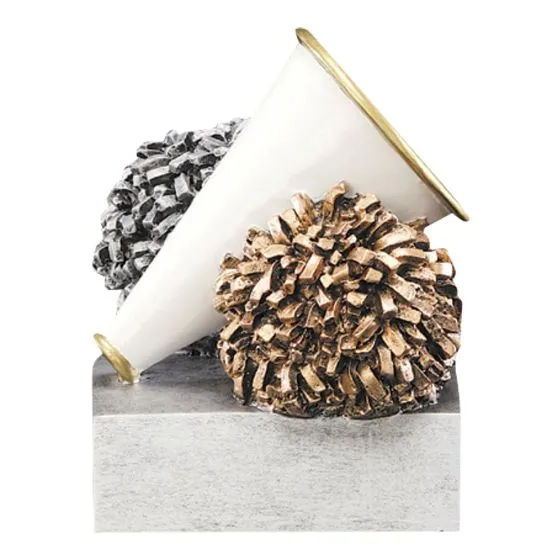
Cheerleaders Not Competitors: Why Competition Has No Place in the Kingdom of Christ
Think about what comparison does. It isolates. It fuels insecurity. It says, “If you succeed, there’s less for me.” Let me remind you, friend: that is a lie straight from the enemy. God is not limited. Someone else’s blessing does not diminish your portion. If anything, it should remind you of the greatness of the Giver. There is no place for a scarcity mentality here - because we are cheerleaders not competitors!
The Body of Christ: Working Together in Unity
When we forget this, we start comparing, striving, and even resenting what God is doing in someone else. There are red flags there, so hold up—Scripture reminds us over and over that we are one body. A hand should not work against another hand. An elbow should not oppose an eyeball. A shoulder should not trip up a toe. Each part matters. Each part plays a role. The body can only function properly when each part works together in unity.
Celebrating Others: A Kingdom Mindset
Cheerleaders, on the other hand, celebrate progress and victory—whether or not they are the ones holding the trophy. They wave the banner of encouragement, not envy. They make noise for someone else’s moment because they know that when one part of the body thrives, the entire body benefits. They are cheerleaders not competitors!
Cheerleaders Not Competitors: Lessons from Scripture
Peter’s Overflowing Catch (Luke 5)
Luke 5 paints this picture beautifully. When Jesus told Peter to put his nets back into the water after an exhausting, fishless night, the catch was so large that the nets began to break. What was Peter’s first reaction? Did he say, “I’ve got to keep this all to myself”? No. Scripture says he signaled for his partners in the other boat to come and help (Luke 5:6-7).
What God was doing for Peter was not just about Peter. It was about blessing others. It was about enlarging the circle of provision and letting the miracle overflow into other people’s boats.
Rejoice With Those Who Rejoice (Romans 12:15)
Paul makes this clear in Romans 12:15: “Rejoice with those who rejoice; mourn with those who mourn.” This is not a suggestion—it is a command. A Christlike posture sees another’s success and says, “Thank You, Lord, for what You are doing in them—and through them—for all of us.”
Strength to Strength Together (Psalm 84:7)
Psalm 84 gives us another glimpse of God’s design for His people: “They go from strength to strength; till each appears before God in Zion” (v. 7). Notice the wording: they go—not he or she, but they. The psalmist is painting a picture of a people on pilgrimage together, drawing strength not just from God, but from one another, until every single one of them reaches the destination.
Cheerleaders Not Competitors: Living as a Cheerleader, Not a Competitor
When I imagine standing before the Lord at the end of my race, I don’t want to come empty-handed or with a spirit of rivalry. I want to arrive arm in arm, hand in hand, raising up my brothers and sisters, celebrating what God has done in all of us. I want to know that I spent my life building others up—not tearing them down, not comparing, not competing—but cheering until the very end. Cheerleaders not competitors!
The beautiful truth about following Christ is that this is not a race where only one person wins. There are no podiums in heaven—only crowns laid at the feet of Jesus. We are all running toward the same finish line, all pursuing the same glory—His glory.
Cheerleaders Not Competitors: Conclusion
Friend, refuse to engage in competition within the body of Christ. Let’s cheer one another on with every ounce of faith and joy we have. When we finally stand before the Lord, my prayer is that we’ll be together—arm in arm, hand in hand—celebrating the goodness of God in all of us. Truth belongs to the Lord. Every gift, calling, or opportunity He places in our hands is not for our glory, but for the benefit of the body of Christ—and when we share joyfully, when we are cheerleader not competitors, we share a treasure!
Galatians 6:2 says, “Bear one another’s burdens, and so fulfill the law of Christ.”
That little verse holds a very big idea. Paul is telling us that when we bear one another’s burdens—when we show love in tangible, practical ways—we are actually fulfilling the law of Christ. What law? The law that Jesus Himself gave us: to love one another, and to be known by that love.
It’s one thing to talk about love, but Paul takes it a step further. He reminds us to put feet on it. Love isn’t only a feeling; it’s an action. Bearing one another’s burdens means praying for each other, lifting each other up, helping each other, and taking action to care for one another in real and practical ways.

For me, this verse is both a comfort and a conviction.
This verse comforts me because it reminds me that I am not alone. If you’ve been with me for any length of time, you know how important relationships are to me. Of course, my relationship with Jesus comes first—but investing in spiritual friendships matters to me as well. This verse reassures me that community is part of God’s design. We weren’t made to walk through life alone.
This verse convicts me because it reminds me that bearing one another’s burdens goes both ways: it means that I share your burdens and also that you share mine.
The first part—helping others—that comes naturally to me. I’m honored to pray for someone, to encourage, to step in and help however I can. But the second part—the part where I’m the one who shares my burdens—doesn’t come as easily.
Can I be vulnerable with you? Somewhere along the way, I picked up a lie: “If I’m not perfect, you won’t love me.” Because of that lie, sharing my own burdens sometimes feels risky. What if I’m rejected? What if people see my weakness and step back instead of leaning in? Maybe you can relate?
The truth is, it’s hard to let others see the places where we’re weak - but if we keep everything inside, we’re missing the fullness of what God designed community to be. (I’m not suggesting that you tell everybody everything. That wouldn’t be wise. We need to use discernment and listen to the Holy Spirit about what to share and with whom. But keeping everything to ourselves isn’t wisdom either).
One of my favorite verses that reminds me of this truth is Psalm 103:14: “The Lord knows our frame; He remembers that we are dust.” God knows our weaknesses. He knows our limits. Still, in His kindness, He placed us in families, in communities, and in relationships with one another so that no one has to walk alone.
Sometimes we forget that perfection was never the expectation. Yes, some people may wrongly expect it, but God never does. He sees our weaknesses, and instead of rejecting us, He meets us with compassion. That’s the same heart we should have toward one another: grace, love, and a judgment-free space where burdens can be shared.
Isaiah 40:11 gives us a beautiful picture of how God deals with us: “He shall feed His flock like a shepherd; He shall gather the lambs with His arm, carry them in His bosom, and gently lead those who are with young.”
What a picture of gentleness. Our Shepherd doesn’t deal harshly with us. He carries us close to His heart. He leads us with tenderness. He loves us when we’re strong and when we’re weak, when we get it right and when we get it wrong. Friend, He delights in you. On your best days and on your worst days, you are a delight to the Lord.
When we live in that freedom—resting in His love—we can extend the same freedom to others. We can walk in grace toward one another, allowing our community to be a safe place where burdens can be shared.
John 3:16 is a verse many of us learned as children: “For God so loved the world that He gave His only Son, that whoever believes in Him should not perish but have eternal life.”
But we often forget to read the very next verse: “For God did not send His Son into the world to condemn the world, but that the world might be saved through Him” (John 3:17).
Our salvation is a free gift. It’s not something we can earn, and it’s not something we can lose by not being “perfect enough.” There is no condemnation in Christ.
If that’s true, then our communities should reflect the same freedom. Bearing one another’s burdens should never come with fear or judgment. You should be able to come to me without fear, and I should be able to come to you without fear—because we’re not trying to meet an impossible standard. We’re simply living as beloved children of God.
If you serve in ministry—a pastor’s wife, pastor, small group leader, Bible study teacher—this can feel even harder. There’s a real (or sometimes imagined) pressure to appear perfect in front of those you serve. I’ve felt that too.
Let me encourage you: don’t be afraid to be vulnerable. Don’t carry the weight of perfection on your shoulders. As you bear the burdens of others, also allow others to bear yours. That’s not weakness—it’s obedience.
When we do this, letting this burden sharing happen on both sides, we’re not just helping each other. We’re fulfilling the law of Christ. Let’s be the kind of people who carry each other’s burdens. Let’s create spaces where it’s safe to be honest, where grace and love flow freely, and where no one has to fear rejection.
We don’t have to be perfect to be loved—by God or by each other. And when we live that way, we fulfill the very law of Christ: to love one another as He has loved us. What a treasure that is! <3
This morning, I’ve been thinking about a promise from Jesus that doesn’t usually make it onto Instagram feeds or coffee mugs. It’s not the one we highlight with glittery pens or turn into wall art, but it is a promise—and it’s one that speaks to real life:
“In this world you will have tribulation.” John 16:33 (NKJV)
Tribulation. Storms. Struggle.
“Praise the Lord from the earth, You great sea creatures and all the depths; Fire and hail, snow and clouds; Stormy wind, fulfilling His word.” Psalm 148:7–8 (NKJV)
These aren’t the moments we rush to post online. We tend to reserve our social media feeds for the highlights—the celebrations, the breakthroughs, the pretty parts of the journey. But what about the fire? The hail? The stormy wind?

Even the stormy wind fulfills His word. That’s hard to grasp sometimes. We believe God is with us in the peaceful places—but what about when life gets loud and chaotic? What about when we’re tossed around by disappointment, uncertainty, or waiting?
The Bible never promises a life free of storms. But it does promise purpose in them and presence through them. Storms don’t disqualify you from God’s promises. They may, in fact, be the very setting where those promises are forged more deeply into your soul.
Scripture also says this:
“The end of a thing is better than its beginning; The patient in spirit is better than the proud in spirit.” Ecclesiastes 7:8 (NKJV)
The end is better than the beginning. But what about the middle?
What about that awkward, stretched-out space between where we started and where we hope to end up? What about the gap?
There’s often a long and confusing distance between the first step of obedience and the moment of breakthrough. Between the letting go and the stepping in. Between the storm and the rescue.
That in-between space is hard.
It’s tempting to question the path, doubt the decision, or wonder if we’ve missed something. But more often than not, the gap is exactly where God is growing our faith.
Maybe you’re in that space today. You said “yes” to something God placed in your heart. You followed His leading. You obeyed. But now… things feel quiet. Or messy. Or painful. Or like nothing is happening at all.
If that’s you, I want to encourage you: the gap is not evidence of God’s absence. It’s an invitation to deeper trust.
Jesus didn’t stop at “you will have tribulation.” He continued with confidence and compassion:
“But be of good cheer, I have overcome the world.” John 16:33
He reminds us that we’re never alone. Not in the joy and not in the struggle. Not at the finish line and not in the wilderness. He has already overcome—and that changes everything.
This morning, a friend texted me a verse she’s been holding onto—a “light at the end of the tunnel” kind of promise. It immediately lifted something in my spirit, and I want to share it with you, too:
“Unto the upright there ariseth light in the darkness: He is gracious, and full of compassion, and righteous.” Psalm 112:4 (KJV)
Light in the darkness.
What a beautiful phrase. Not just light after the darkness. Light in it.
God doesn’t wait for the storm to end to show up. He doesn’t wait for you to figure it out before offering His compassion. He is gracious and kind and righteous—right in the middle of your mess.
The gap doesn’t mean you’re lost.
It doesn’t mean the story is over.
It just means you’re in the middle.
The middle matters more than we often realize. It’s where character is shaped. It’s where trust is refined. It’s where you learn not just to believe in God’s promises—but to believe in His heart.
If you find yourself in a waiting season today, I want you to know:
You are not behind. You are not overlooked. You are not forgotten. You are simply between the beginning and the breakthrough. The storm may still be raging, but the Lord is still speaking. The fire may be refining, but His compassion is still surrounding. The path may feel uncertain, but His presence is steady and sure.
So hang in there, friend. You don’t need to see the whole map to trust the One who wrote it. You don’t need the full ending to rest in the Author of your story. You don’t need a picture-perfect update to prove that God is working.
He is working - and when the light arises you’ll see how deeply He’s been present in the process all along.
So if you’re in the gap today—between the step and the arrival, between the storm and the rescue—take heart. You’re not alone. You’re not empty. You’re not forgotten. And you're not alone - I'm here with you.
You’re walking with the One who has already overcome - and that is a promise, a treasure, worth holding on to <3
There comes a moment in every believer’s life when the choice is clear: stay safe and stuck, or take a step of faith. We talk a lot about trusting God, but sometimes trust looks less like peaceful waiting and more like nervous obedience. A shaky step forward. A deep breath and a gulp. However, if you know God is calling you, you must move forward.
Faith doesn’t always feel strong. In fact, it often feels like trembling hands and racing hearts. But faith is not the absence of fear—it’s movement in spite of it. This is the kind of faith God honors, this is the kind of faith that advances His Kingdom.
Let’s look at a few examples of faithful forward motion in Scripture. These aren’t fairytale heroes who always felt bold and sure—they were real people who chose obedience even when the path ahead felt risky or unclear.
Abraham: Moving Without a Map
Abraham’s story in Genesis 12 begins with a stunning command: “Go from your country, your people and your father’s household to the land I will show you.” (Genesis 12:1, NIV)
Not “Go to Canaan.” Not “Here’s a route, here’s your GPS.” Just “Go… to the land I will show you.”
Imagine packing up your life, your family, your future—and stepping into the unknown with no details, no destination, and no guarantees except God said so. Abraham didn’t wait for every detail to fall into place. He moved forward at God’s word. That’s faith.
Daniel: Standing Alone with Conviction
Fast forward to Daniel, exiled in Babylon—a godless culture, surrounded by compromise. Everyone around him had adjusted their standards. Daniel could’ve gone with the flow to keep his position and his comfort, but instead, Daniel “resolved not to defile himself” (Daniel 1:8), even though that meant standing almost completely alone. He was faithful in the small decisions—what he would eat, how he would pray—and God honored it.
Daniel shows us that forward motion in faith sometimes looks like staying planted in conviction while everyone else drifts. It may not be popular. It may cost you status or relationships. But if God has called you to stand—stand.
Esther: Courage in the Face of Risk
Esther’s story is one of the most well-known in Scripture. She was given a divine opportunity to influence a king and save her people. Stepping into that moment wasn’t glamorous, it was terrifying. She told Mordecai, “I will go to the king, even though it is against the law. And if I perish, I perish” (Esther 4:16). Esther had every reason to stay silent. Self-preservation would’ve been the easy choice. Faith compelled her to speak up—even when the cost could’ve been her life.
Sometimes moving forward in faith means putting it all on the line. It’s not reckless—it’s trusting that God’s hand is over the outcome.
Jesus: Obedience to the Cross
And of course, our ultimate example is Jesus. No one was more aware of the cost of obedience than Christ Himself. He knew the cross was coming. He knew the betrayal, the suffering, the agony. He even said, “Don’t you think I could call on My Father, and He would at once put at my disposal more than twelve legions of angels?” (Matthew 26:53). But Jesus didn’t call for a rescue. He submitted. He obeyed. He moved forward—for us.
“Not my will, but Yours be done.” (Luke 22:42)
Jesus teaches us that sometimes faith means walking straight into pain, into sacrifice—knowing that resurrection is coming, that purpose is on the other side, and that the Kingdom of God is worth it all.
Your Turn: Do Your Part
Each of these stories reminds us that the first step doesn’t always come with full clarity or confidence. But God doesn’t ask for perfect understanding—He asks for obedience.
What’s your move?
- Is it a job change that doesn’t make sense on paper?
- A conversation you’ve been avoiding?
- A ministry you feel unqualified to start?
- A boundary you need to hold, even if it’s unpopular?
Whatever it is, take the step. God’s provision meets our obedience. When we do our part—when we trust, move, stand, speak, obey—He always does His. Do you need provision for your step of faith? He's a provider. Do you need protection for your step of faith? He's your Protector. Do you need wisdom for your step of faith? He's your infallible guide.
Scripture says, “The Lord will fight for you; you need only to be still.” (Exodus 14:14) Be careful: "still” does not mean stuck. Sometimes it means settled in trust as we keep stepping forward.
So take a deep breath. Gulp if you have to. But move forward. You'll find that your treasure awaits on the other side of your obedience!

p.s. here's my move of faith today! Launching a new ministry, Connect Mentoring Network. Friend, we are in this together - as I am asking you to step out, I am also stepping out! Let's pray for each other!
Spiritual friendship is not just “nice to have” in the Christian life—it’s essential.
"Two are better than one... If either of them falls down, one can help the other up." Ecclesiastes 4:9, 10

Have you ever hesitated to reach out to someone, afraid of being rejected or misunderstood? Maybe you saw someone at church who looked a little lonely, or a mom at the park who seemed like she might want a chat. You thought, “I should go say something”, but then quickly talked yourself out of it…. Let’s be honest—friendship on its own can feel risky, but being the one to make the effort ups the risk for sure.
Let’s start with the obvious: initiating friendship feels vulnerable. You don’t know how you’ll be received. You risk feeling awkward, ignored, or even rejected. In our social-media-saturated world, it’s easy to stay in our own bubble, where we scroll, like, and comment without ever truly engaging.
From the beginning, God said, “It is not good for man to be alone” (Genesis 2:18). While that verse speaks to marriage, the principle really is broader. We are created for connection. Scripture is full of examples of deep, godly friendships: David and Jonathan, Ruth and Naomi, Paul and Timothy, Jesus and His disciples.
Still, we hesitate.
We tell ourselves lies like:
- She probably has enough friends already.
- What if she thinks I’m too much?
- I don’t want to come across as needy.
- I’ve been burned before—I’m not doing that again.
All of those fears are valid—but fear doesn’t get to have the final say. When it comes to godly friendship, the return on investment is greater than we can imagine. God's best for you happens in community; it's the enemy of your soul who wants you in isolation.
Jesus Himself modeled what it means to initiate relationship - we talked about this on the blog a few weeks ago. Check it out here if you missed it!
Jesus invited Himself over. Jesus made the first move. If the Son of God was willing to reach across social barriers, awkward situations, and the opinions of others to extend friendship, shouldn’t we be willing to do the same? The truth is, anything worthwhile involves some level of risk, and that includes friendship.
Friendship doesn’t happen by accident. It’s not something we stumble into—it’s something we choose to build. Like any investment, it requires intentionality, time, and sacrifice.
I loved morning car rides with my children on the way to school when they were small many years ago. There were a couple of verses that were on the usual rotation, and one that was repeated often was Proverbs 18:24. “A man who has friends must himself be friendly.” That’s not just a cute quote—it’s a reminder that friendships grow when we’re willing to plant seeds.
Sometimes those seeds look like:
- Sending the first text.
- Asking someone to grab coffee.
- Sitting next to someone new at church.
- Starting a conversation, even when you feel awkward.
Prepare yourself: not every seed grows into a deep friendship. Some fade. Some were only meant for a season. However, some grow roots so deep that they strengthen your faith, bring you joy, and sharpen you into the person God is calling you to be. Those kinds of roots bring forth good fruit, friends who will:
- Speak truth when we’re tempted to believe lies
- Pray for us when we don’t have the words
- Celebrate our victories and mourn our losses
- Keep us accountable and point us back to Christ
- Lift us up when we feel down
That kind of friendship doesn’t just happen. It starts with someone being brave enough to go first.
Here’s the thing: you’re not the only one longing for connection. That woman you keep thinking about inviting to coffee? She might be praying for someone like you. The young mom sitting by herself at small group? She may be hoping someone notices her.
Someone is waiting for you to be bold. Not perfect. Just willing.
This week, take a step toward friendship. Plant the seeds. Show yourself friendly.
- Send the text.
- Invite the person.
- Sit next to someone new.
- Smile first.
- Speak up.
- Be the one who reaches out.
Are you nervous or unsure? That's okay, don't let those feelings stop you. Friendship built on faith, truth, and love is worth every bit of risk and effort. Remember that Jesus made the first move toward us. He came close. He extended His hand. Let’s follow His lead.
Godly friendship is a treasure - but many times you have to make an effort to enjoy it's benefits!
p.s. I’m continuing this discussion on the podcast this week! New episode will drop on Thursday. Subscribe on Youtube, Spotify or Apple Podcasts this week so we can connect again! Here’s the link tree so we can connect!
“Let Christ himself be your example as to what your attitude should be. For He, who had always been God by nature, did not cling to His prerogatives as God’s equal, but stripped Himself of all privilege by consenting to be a slave by nature and being born as mortal man. And, having become man, He humbled himself by living a life of utter obedience, even to the extent of dying, and the death He died was the death of a common criminal” (Philippians 2:5-8 Phillips)
(I love the Phillips translation! Try reading the Bible in a translation that is new to you - it will give it a fresh take!)
“Let Christ himself be your example as to what your attitude should be”
Jesus’ motivation, His very existence, His entire purpose for coming to earth was to redeem and rescue. He said Himself, “For the Son of Man himself has not come to be served but to serve, and to give his life to set many others free” (Mark 10:45 Phillips). His constant motivation was love. What if this was the litmus test for our actions as well?
Check your attitude this morning: Let Christ Himself be your example.
- Is love your continual motivation?
- Are you more interested in serving others than in serving your own purposes?
I have to ask myself these questions daily. I find myself in situations daily where I have to make a decision separate from the inclination of my flesh. I find myself daily evaluating what is best for me vs what is best for the people within my sphere of influence.
Sometimes the required action is mutually beneficial - sometimes the required action does not seem beneficial to me, so what do I do? I trust the Lord to love me as I follow His example in loving others. I trust Him to take care of me as I take care of others. I leave behind the scarcity mentality.
It’s not exactly 100%. As much as I want everything to be black and white, right and wrong (I find comfort in the boundaries), there’s gray. You pray and do the best you can. You ask the Lord to test your motives and reveal your heart. You ask Him to search you and know you. Even Jesus took care of HImself - He went to the garden alone. He took the disciples away for a rest. He slept in the boat before the storm. He fasted and was separate, always doing what the Father asked Him to do. Take this as an example, not an excuse.
If I choose SELF over OTHERS, then I am not trusting the Lord. If I choose SELF over OTHERS, then I am not loving as Jesus loved. Loving like Jesus loves means that I come in second.
“For He, who had always been God by nature, did not cling to His prerogatives as God’s equal, but stripped himself of all privilege by consenting to be a slave by nature and being born as mortal man”
It’s significant to notice that Jesus never claimed the rights due Him as the Son of God. Reading His life years later, we might not complain had Jesus moved into His comfortable house and taught at the local church, teaching people how to minister and sending them out, but never leaving His own town. We might think, “Well, that’s what the boss does. The general himself doesn’t go out into the front lines…” and then in our twisted way of thinking, we would have concluded that leadership was a place to arrive at, and that the “harder work” will come to an end at some point.
I did think when I was younger “well, when I have more money”, “well, when I am finished with school”, “well, when we have a larger church”, “well, when fill-in-the-blank-here”, THEN I will have arrived, THEN I won’t have to work so hard, THEN, life will be easier.
You see the downward spiral there? Jesus knew, God knew, that one day in our society centered on SELF, we would misinterpret Jesus and think there was a place to arrive at, some place where it would be okay that our own needs came before the needs of others, to a place where it was okay for us to be comfortable and supervise. That would not do - so Jesus made sure that He took on all the wonders and all the hardships of being human, and didn’t lay claim to any “rights” He may have enjoyed as the Son of God.
It’s important to note the why: why did Jesus lay aside His prerogatives as God’s equal? I think two things:
He knew Who He was, and He knew the behavior of others would not change His identity.
I also think that insisting on His rights, driving home the point that He “was God’s equal and therefore” wasn’t the main thing. The main thing was to reconcile people back to God. The main thing was to demonstrate the love and the heart of the Father, the main thing was to serve and be served, the main thing was to communicate
“The Spirit of the Lord is upon Me,
Because He has anointed Me
To preach the gospel to the poor;
He has sent Me to heal the brokenhearted,
To proclaim liberty to the captives
And recovery of sight to the blind,
To set at liberty those who are oppressed;
To proclaim the acceptable year of the Lord.” (Luke 4:18-19 NKJV)
In order for people to receive salvation and experience the benefits of Jesus’ sacrifice on the cross, they were going to have to also understand that He was God’s Son, sent as a substitute for their sins. But that wasn’t the gateway to Jesus’ message: "God loves you, God wants you free, God wants you healed, God wants you whole - and if I can effectively reconcile you back to God, you’ll know that I am truly sent from Him”. His motivation was love for these lost people, these sheep without a shepherd.
My first career was teaching music in elementary grades. My point in teaching music was not to make sure that the kiddo’s know that I am their teacher - I never taught a lesson on who I am. However, as I stay on message, they figure it out and they begin to trust me. One day they’ll dance at their wedding or sing a lullaby to their child, and I’ll have a small part in that. And that’s literally nothing, so insignificant in comparison to Jesus’ purpose, it’s embarrassing to even mention it. For Jesus, the most important thing was communicating His purpose, not promoting His position.
If we are going to love people like Jesus loved people, we’re going to have to figure out what the most important thing is and stay on that - and the most important thing is not us.
Maybe loving like Jesus loves requires laying aside my “rights” or promoting His purpose over my position for the benefit of others.
“And, having become man, He humbled himself by living a life of utter obedience”
Look at this, it’s not going to be popular:
Humble: 1. having or showing a modest or low estimate of one's own importance.
- of low social, administrative, or political rank
So being humble is having a modest view of your own importance (Jesus was the very definition! Who is more important than He is? Who had a more modest view of Himself than He did?) OR actually being of low rank.
I guess it’s the same as the last point - but if you have to move out of the way in order for someone to see God, move out of the way. If you have to work hard for the greater good and at the end of the day no one noticed or even knew, you’ll have the satisfaction of knowing that God sees you - and He is the reason you are working anyway.
And being seen by the Lord? Wow, what an amazing treasure that will be! <3

Among all the other changes and life events, we moved about three years ago. Not to a new town, just a new house. With all the "babies" grown and moved out, I guess it was time to downsize. In my dining room, I have these floating shelves above my sideboard, super cute. I love to decorate them with my favorite things. After having so much fun decorating them for Christmas, I decided I would do a subtle little "nod" to Valentines - I put out my paternal grandmother's formal china with its little pink rosebuds, got a few pink things from Hobby Lobby and Target (and even had a Valentines dinner for some friends with pink chargers!). Fun! (oh how Mama Annie would love it too, seeing her dishes so loved!)



Since Christmas and Valentines Day were so much fun, I decided a little "nod" to St Patrick's Day would be fun too, so off to my favorite shops I went! Turns out, St Patrick's day is not subtle.... everything I saw was pretty "loud", sparkly, not the little "hint" of shamrocks I had hoped for, but then I remembered: my little Irish girl! Can we take a little rabbit trail together?

My maternal grandmother collected music boxes. Lots of them, shelves and shelves, boxes and boxes. I loved playing with them when I was small. Some were very large, some were very expensive, but all of them were out - she didn't mind when we played them. This little Irish girl plays "When Irish Eyes Are Smiling", but have your earplugs handy when I start her up - she's so out of tune, it will give you a headache when she plays. Her dress is cracked, someone glued her back together long before I was around. Her paint is worn off in places. I have very specific memories of this one when I was small - every time I got down the music boxes, I made sure she was one of them. I remember feeling sorry for her, thinking that no one would play with her because she was broken and didn't play a pretty tune. I always thought no one would want her, so I made sure to give her some attention when I visited. Isn't it funny the things were think when we are young?
When my grandmother passed away, my mother, aunts and uncle asked the grandchildren if there was anything in the house we would like. I don't think anyone objected when I requested the little Irish girl, and I was so pleased to bring her to my house. Today, she was the perfect "nod" to St Patrick's Day for my floating shelf. I decided to display my maternal grandmother's china along with her music box - it might not be "St Patrick's Day official", but it makes me smile. It makes me remember. (oh how Super Nana would have loved this too!)

You know, these little treasures - china and chargers and music boxes - all contain little lessons. Titus 1:15 says, "To the pure, all things are pure". I think this means that God can speak to me in everything if I focus my attention on Him, let my desire for His truth be the filter through which He speaks to me. So, today the lesson is about a broken, out of tune, faded out, old music box.
She doesn’t sparkle. She doesn’t sing sweetly. She doesn’t work quite right. Her dress is cracked. But she’s still treasured - not because of how well she performs, but because of who she belonged to, and the memories she holds. I don’t love her because she’s perfect—I love her because she belonged to my grandmother and now she belongs to me.
And isn’t that just like the Lord?
We may be cracked. Our song may be off-key. We may feel forgotten, or passed over, or patched together one too many times. Even in our imperfections, God chooses us. Loves us. Delights in us. Simply because we are His.
Psalm 22:30 says, “Future generations will hear about the wonders of the Lord" (NLT). I want to be the kind of woman who tells. Who shares. Who puts broken music boxes on the shelf and pink chargers on the table and celebrates every season of life, because every one is a gift. I want to be a bridge between generations—passing down beauty and brokenness, faith and joy, love and legacy.
And in this way, even my little broken Irish girl becomes a treasure <3