Can a pastor's wife have friends? I believe the answer is a resounding yes! This post is adapted from a conversation between Jennifer Spivey and Jan McIntyre for Silently Bleeding: Hope for the Pastor’s Wife. It is the first in a series exploring healthy friendships, relationships, boundaries, and emotional health for women in ministry. Click here for the original interview - and if you are a pastor’s wife, subscribe to Jennifer Spivey and also to Silently Bleeding! We are in this together!
If you are not a pastor’s wife, stay with me anyway - these principles of healthy friendships will serve anyone in life and leadership well!
When Michael and I first entered ministry, I had lunch with a pastor’s wife who wanted to tell me everything I needed to know before we moved thirteen hours away to join a church staff.
I was young, excited, and already in love with the people we were going to serve. I was so excited to have this ministry leader offer me a little insight and time! I didn't know enough yet to even ask, "Can the pastor's wife have friends?" Then she said something I’ll never forget:
“Jennifer, what you need to know right now is that you are no longer going to have friends. People in the church only want to use you for information, and when your husband makes them angry, they’re going to turn on you too. So just keep to yourself.”
I remember thinking, I’m moving thirteen hours away from my family and my friends, and you’re telling me these people don’t even like me?
I understand now that she was trying to protect me. She had been hurt. She had learned to build walls around her heart, and she wanted to help me avoid the pain she had experienced. After three decades as a pastor’s wife myself, I feel the same heart and desire to protect those coming after me. I’m still grateful for her, her heart for me, and her time. However, it made for a lonely season in my new home!
This was not unusual advice. For years, ministry wives have been told things directly or indirectly that may sound wise but often produce something unhealthy: “Don’t have friends in the church.” The answer to the question, "Can the pastor's wife have friends?" was apparently a hard no.
Some months after arriving at that first church, a blessing came: another associate on staff with us became engaged. When we went to dinner to celebrate with the soon-to-be-married couple, this precious woman leaned over to me. She whispered, “Missy, I’ve already been told I can’t have friends anymore, so guess what? That means me and you are new best friends! We’re in this together!” What a gift she became as we served together!
From that early friendship and the years that followed, I learned something very different from that initial piece of advice: You can have friends. You can have friends inside your congregation. You can have friends outside your congregation. You can have close friends.
And, ministry wife, you need them.
Can a Pastor's Wife Have Friends? Yes! You Are Still a Human Being
Of course, being a pastor’s wife comes with unique responsibilities. There are things you may know that other people don’t know. There are situations where you have to exercise discretion. There are times when you need to choose carefully what you share and with whom you share it.
However, you are still a human being. You were created for relationship.
The very first thing God declared ‘not good’ during creation was that man was alone (Genesis 2:18). We were never designed to live isolated lives. Galatians 6:2 tells us to “bear one another’s burdens,” and that is one of the beautiful gifts of godly friendship.
Just because you are the pastor’s wife doesn’t mean you don’t have burdens.
You still need someone to call when your heart is hurting.
You still need someone to celebrate with when something wonderful happens.
You still need someone to laugh with over coffee.
You still need someone who knows your story and loves you anyway.
You still need women who will pray with you.
Being a ministry wife doesn’t cancel your need for friendship.
Can a Pastor's Wife Have Friends? Yes! Wisdom Is Not Isolation
Now, before someone says, “But Jennifer, you can’t tell everyone everything!”
I agree. But that isn’t unique to ministry. It isn’t wise for anyone to tell everyone everything all the time.
There are things I might share with my husband that I wouldn’t share with a friend. There are things I might share with a close friend that I wouldn’t share with someone I’ve just met. There are things I might ask another pastor’s wife about because she understands the particular situation I’m navigating.
And there are things that simply aren’t mine to share at all. That’s not deception. That’s wisdom.
Sometimes people confuse privacy with secrecy. They assume that if we aren’t telling everyone everything, we’re somehow being dishonest.
But Mary gives us a beautiful picture of something different. Scripture tells us that she “treasured up all these things, pondering them in her heart” (Luke 2:19).
There are some things we simply hold close. Wisdom means knowing what to share, when to share it, and with whom to share it.
This is true no matter what your title or situation is: use wisdom and discretion. Whether you’re a pastor, an attorney, a teacher, or a mail carrier, you need to choose carefully what you share and with whom you share it.
Can a Pastor's Wife Have Friends? Yes! Model the Friendships You Want to See
One of the best things a pastor’s wife can do is model healthy friendship.
Celebrate spiritual friendships. When two women in your church become friends, celebrate it.
When you see women having coffee together, don’t wonder, Why wasn’t I invited? Be genuinely glad.
You want the women in your church to love each other. Sometimes they’ll invite you. Sometimes they won’t. It doesn’t have to be personal.
I’ve found that when I celebrate the friendships of the women around me, they are much more likely to celebrate mine.
The women in my church know that part of my own rhythm of life includes taking a girls’ trip a couple of times a year. They see the pictures.
When I come home, they ask, “How was your trip?” It doesn’t create jealousy because healthy friendship has become normal. I think that’s important.
Can a Pastor's Wife Have Friends? Yes! It is not healthy for the pastor’s wife to be a lone ranger.
If the loneliest person in the church is the pastor’s wife, I would at least wonder if something is unhealthy—not because loneliness makes her less effective in the role of pastor’s wife, but because isolation is rarely a healthy long-term strategy for anyone.
Can a Pastor's Wife Have Friends? Yes! Your Close Friends Need to Understand Your Role
One of the greatest challenges of having friendships inside the church is managing expectations. Friendship involves trust.
If I call my close friend and say, “I need you to pray for me because….”, I’m trusting her with my story.
But my friend knows that if someone else has trusted me with their story, she also understands that I may not be able to tell her about it. She doesn’t interpret my silence as a lack of trust. She understands that sometimes Michael and I are entrusted with information that isn’t public.
She understands that our friendship isn’t built around collecting other people’s stories. She understands that our friendship exists to help us bear one another’s burdens—not to carry around everyone else’s secrets.
That kind of understanding made healthy friendship within my congregation possible. The few women who understood this dynamic became close friends of mine within my congregation—and remained close friends even after I left that particular church.
Can a Pastor's Wife Have Friends? Yes! You Don’t Have to Be Best Friends With Everyone
This is another place where ministry wives can put unnecessary pressure on themselves.
You don’t have to be equally close to every woman in your church. In fact, you probably won’t be.
Some people will naturally become closer friends because of shared interests, similar seasons of life, proximity, or simply the way God connects your hearts. That’s normal.
I think we sometimes confuse loving everyone equally with spending equal amounts of time with everyone. Those aren’t the same thing.
I can love every woman in my church deeply without having coffee with every woman in my church every week. I can spend an afternoon with a friend or two without that meaning I’ve intentionally excluded everyone else.
During COVID, I learned this lesson in a very practical way. When things began opening back up, I went through a drive-through with a couple of women from church. These weren’t new relationships. We’d spent time together before. We were friends and it wasn’t a secret.
One of us took a picture and posted it on Facebook. Innocent, right? Everyone posts the obligatory selfie, don’t they?
Not long afterward, I received a few phone calls. Complaints, really. Imaginary offenses that sounded like: “Well, I thought you and I were going to hang out.”
I remember replying, “We are! We have, and we will.”
That trip to the drive-through wasn’t an exclusive club. We weren’t against anyone else. We were simply three friends having lunch. Not everyone understood - and to be honest, I had to be okay with that.
Sometimes we create expectations in our relationships that no human being could possibly fulfill. Healthy friendships require us to release those expectations.
Can a Pastor's Wife Have Friends? Yes! Keep Your Heart Open
Years ago, one of our associate pastors got engaged. I loved his fiancée immediately.
I also remember thinking, I’ve got to get to her before Google does.
I called her and said, “Whatever you do, don’t Google ‘pastor’s wife.’” She laughed. “Too late,” she said. “I already learned I can’t have friends anymore.”
I said, “Let’s go have sushi, and we’ll work this out.”
We talked about healthy relationships. I encouraged her: Yes, there are things you can’t tell everyone. Yes, you need wisdom. Yes, people may hurt you.
But before you became a pastor’s wife, could you tell everyone everything? No. So we’re going to be normal. You’ll have things you keep private. You’ll have things you share openly. You’ll have coffee with people. You’ll have friends inside and outside the church.
You don’t have to become a best friend to every woman in your congregation.
But you can live with your heart open and your arms open wide.
That’s where I believe the real blessing begins.
Can a Pastor's Wife Have Friends? Yes! But, Don't Replace Jesus as Your Best Friend
There is one more important piece to healthy friendship:
Your friend cannot be your Savior.
I spoke with a dear friend and fellow pastor’s wife about this, and she told me something so valuable: there was a season when she realized she was running to the phone instead of running to the Throne.
That phrase has stayed with me.
Friends are gifts from God. They are not God. A friend can pray with you. A friend can encourage you. A friend can listen. A friend can sit beside you in the middle of heartbreak.
But your friend cannot carry the weight that only Jesus can carry.
Sometimes God may even allow a friendship to change or enter a season of distance because He is lovingly reminding us where our ultimate source is.
Run to the throne first. Then call your friend.
When our priorities are in the right order, our friendships become healthier because we aren’t asking another human being to fulfill a role only God can fill.
Can a Pastor's Wife Have Friends? Yes! You Can Have Friends—and You Need Them
When Michael entered ministry in 1996, the advice really was: Separate yourself from people in the church. Don’t let anyone get too close. Pretend you’re perfect. Smile all the time. Don’t tell anyone anything.
I understand why that advice existed.
People have been hurt. Ministry can be complicated. Confidentiality matters. Wisdom matters.
But I don’t believe isolation is the answer.
Can the pastor's wife have friends? Yes! You can have friends.
You can have friends inside your church. You can have friends outside your church.
You can have ministry friends who understand the unique things you carry.
And you can have friends who have nothing to do with ministry at all.
You are a ministry wife. But before you are a ministry wife, you are a woman whom God created for relationship.
So open your heart.
Exercise wisdom. Protect confidences. Celebrate the friendships around you. Run to the throne before you run to the phone.
And then?
Go have coffee with a friend.
You were never meant to walk alone.
I want to leave you with some reflection questions today:
- Have you ever been told that ministry wives shouldn’t have close friends? How did that advice affect you?
- Do you tend to isolate yourself when you’ve been hurt?
- Are there friendships inside your church that you could intentionally invest in?
- Are there friendships outside your church that need more investment?
- Are you running to the phone before you run to the Throne?
- What would it look like for you to live with your heart open while still exercising wisdom?
Can a Pastor's Wife Have Friends? Yes - but let’s Be Honest. Will There Be Hurt?
No one escapes heartache and pain, That’s part of living in this fallen world. Even in friendships, there will be seasons, transitions, misunderstandings, loss, and sometimes even betrayal.
Like the first ministry wife who spoke to me at the very beginning, my heart is to prepare you - and yes, even warn you. The possibility of pain is real.
But the possibility of pain is not a reason to isolate.
Let’s put a bookmark there and pick this conversation next week. We have more to unpack. We’re in this together!
Can a Pastor's Wife Have Friends? Yes! Leadership and Friendship: You Can Have Both!
We’ll continue this conversation on the Connect Podcast this week. Subscribe here so you never miss an episode.
If you’re looking for a place to grow deeper in Christ while serving faithfully in ministry, I’d love to welcome you into the Connect Mentoring Network—a community offering biblical resources, courses, mentoring, encouragement, and connection with other women in ministry.
Whether you’re a pastor’s wife or a woman serving on a ministry staff, you don’t have to hold the microphone to help shape the story. You can lead well from your front-row seat—and you can do it in a way that is healthy and sustainable.
If you’d like to learn more, check out my Leading From the Front Row e-course, available as a stand-alone course or through membership in the Connect Mentoring Network.
You were never meant to navigate ministry or life alone. Let’s stay connected!
Have you ever found yourself asking, “If this is God’s will, shouldn’t it feel easier?”
It’s a question many of us wrestle with. We naturally associate peace with comfort, ease with blessing, and open doors with God’s approval. But when we read Scripture, we discover a different pattern.
Again and again, God calls ordinary people to extraordinary obedience—often requiring them to leave behind what is familiar before they experience His provision.
Noah built before it rained.
Abraham left before he knew the destination.
Ruth walked away from everything familiar.
Jonah learned the hard way that comfort and calling are not always found in the same place.
God’s invitation has never been to pursue the easiest path. His invitation is to follow Him faithfully, trusting that His presence is greater than our preference for comfort.
As I reflected on this truth, I had the privilege of writing a new article for The Christian Post titled “Comfort Is Not Confirmation: Rethinking How God Blesses Us.” In it, I explore what Scripture teaches about obedience, God’s provision, and why we should be careful not to mistake comfort for His confirmation.
👉 Read the full article here: https://www.christianpost.com/voices/comfort-is-not-confirmation-rethinking-how-god-blesses-us.html

As you read, I’d encourage you to prayerfully consider these questions:
- Is there an area where I’ve allowed comfort to influence my decisions more than obedience?
- Am I waiting for circumstances to become easier before saying “yes” to God?
- Where has God already made His direction clear?
- What is one step of faithful obedience I can take today?
One of the beautiful truths of Scripture is that God doesn’t ask us to have every answer before we obey. He simply asks us to trust Him with the next step.
Whether you’re navigating a ministry transition, a career decision, a family challenge, or a season of uncertainty, remember this: God’s faithfulness isn’t limited by your circumstances. He is present wherever He calls you, and His grace is always sufficient for the journey.
I’d love to hear your thoughts after you’ve read the article. Leave a comment below or send me a message and tell me what resonated with you most. Your stories encourage me, and I know they’ll encourage others as well.
Grace and peace,
Jennifer Spivey
I have something really special to share with you—my book is officially LIVE on Amazon! 365 Days, One Story is a year long devotional designed to walk with you through the Bible in chronological order.
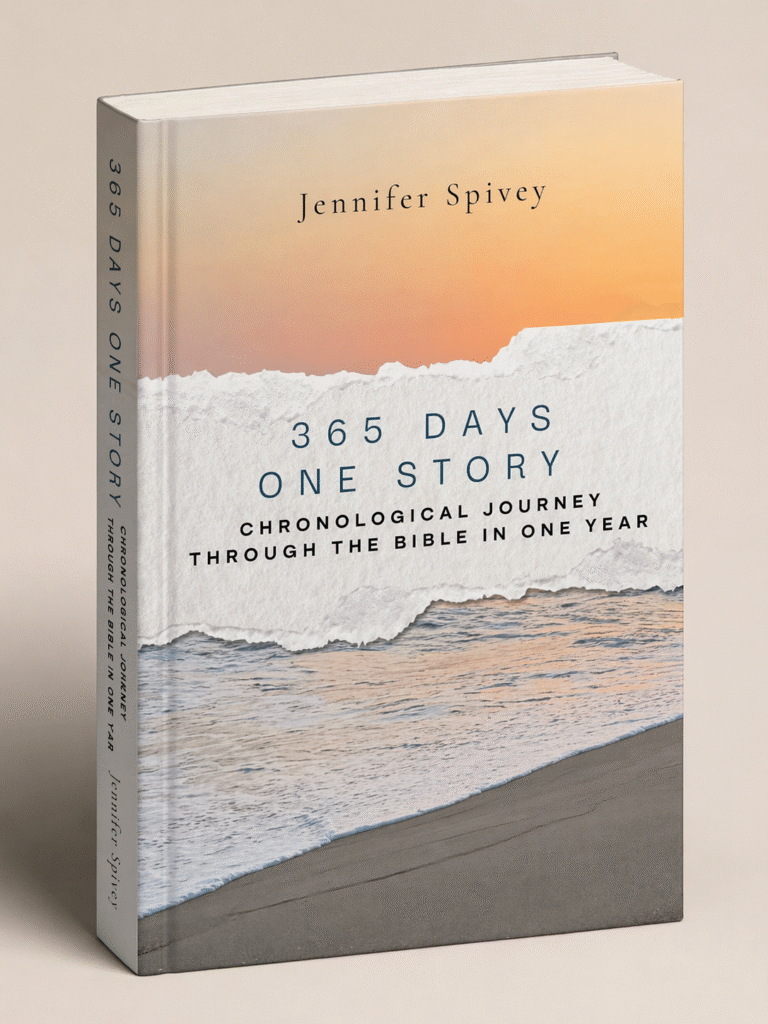
This project has been such a journey, and I truly believe God placed this message on my heart for a reason. Many of you were with me at the beginning, when we took our first journey through the Bible in chronological order some years ago. My prayer is that this book encourages you, equips you, and draws you closer to Him.
If you’d like to support, here are a few simple ways:
- Grab a copy of the book
- Leave a short review on Amazon (early reviews help SO much!)
- Share it with someone who might need this message
Your support means more than I can say—it truly helps this message reach farther!
You can find the book by searching my name, Jennifer Spivey, on Amazon or https://tinyurl.com/mryrz3ta. Kindle edition or paperback!
Thank you for being part of this journey with me.
Much love,
Jennifer
Last week, we started our series on how to set boundaries with needed background information: what boundaries are, why we set boundaries, and where we set boundaries. If you missed it, take a minute to catch up here - it will be worth your time!
However, we left it on a cliffhanger: we didn’t get into the real how-to. Now that we have talked about the what, why, and where, let’s get into the how of how to set boundaries!
We all have full lives, full hearts, and full calendars, don’t we? There’s always one more thing to do, one more person to help, one more need to meet. However, even with the best intentions, we simply cannot pour from an empty cup. Your time, energy, and emotional capacity are gifts from God. He gave you 24 hours, and how you use that time is a matter of stewardship.

How to Set Boundaries: How to Set Boundaries With Grace
Sometimes the hardest part of boundaries is the moment you actually voice them. Saying “no” or expressing a limit can feel scary, awkward, or even unkind. Maybe a friend wants you to take her children to school every day, or your pastor hopes you’ll take on a big responsibility at church. These are good things—and it’s a compliment to be considered. But your true power, superwoman, is in being able to follow the leading of the Holy Spirit. Don’t get tangled in that cape!
With God’s help, it is possible to learn how to set boundaries with gentleness, confidence, and grace. And when you do, something beautiful happens: you protect your peace, and your relationships become healthier, clearer, and more rooted in truth. Boundaries don’t push people away—when done well, they create space for growth.
When you invite Him into your schedule and ask, “Lord, what have You given me grace for today?” He will faithfully show you where your limits are… and where your “yes” will bring Him glory.
Speak the Truth in Love
In Ephesians 4:15, Paul encouraged believers to “speak the truth in love.” In the practical, everyday work of learning how to set boundaries, here are a few helpful phrases:
- “I can’t take that on right now, but I can help in this way…”
- “I need to focus on this priority and won’t be available at that time.”
- “This is a wonderful idea! I’m not called to participate right now, but you can count on me for prayer support!”
Friend, you are playing to an audience of One. The only expectations you need to meet are the ones your loving Heavenly Father has for you. This isn’t a cookie-cutter process—the gifts and callings on our lives are as varied and unique as we are.
I can’t tell you whether to coach the ball team, start the blog, or teach the music lesson. I can’t even tell you whether to stop any of these things. That’s the role of the Holy Spirit. Lean into Him and refuse to feel guilty for following His leading.
Pray and Discern God’s Guidance
Before you set any boundary—or even decide where your yes or no should go—take a moment to slow down and breathe with the Lord. Life pulls at us from a hundred directions, and it’s easy to say yes out of habit, pressure, or guilt. When you pause long enough to pray, you create space to hear God’s gentle, steady voice above the noise.
Ask Him to show you where you’re stretched too thin, where your heart needs rest, and which relationships require healthier rhythms. Invite the Holy Spirit to shine a light on the gifts He’s given you and how He wants you to steward them with joy, not exhaustion.
Scripture reminds us, “If any of you lacks wisdom, you should ask God… and it will be given to you” (James 1:5). That’s a promise you can lean on. As you pray, trust that God will clarify what drains you, what strengthens you, and what He is lovingly asking you to protect. Boundaries aren’t just practical—learning how to set boundaries is deeply spiritual.
Identify Your Non-Negotiables
Healthy boundaries start with clarity—specifically, clarity about what you will not compromise. Your non-negotiables might include daily time with God, meaningful connection with your family, restorative rest, or protecting your emotional and mental well-being.
When you name these priorities, it becomes easier to recognize when something (or someone) is pulling you away from what God has entrusted to you.
Even Jesus had well-meaning people around Him who unintentionally tried to redirect His day. In Mark 1:32–39, Jesus withdraws to a solitary place to rest after a powerful time of ministry. When the disciples find Him, they want Him to stay and continue healing—but Jesus knew His purpose. He responds kindly and firmly, saying He must go to the next towns to preach, “because for this purpose I have come” (1:38).
There will always be someone ready to tell you the “best” use of your time. Jesus gives us a powerful example: when the moment calls for it, it’s vital to know how to set boundaries.
Communicate Clearly and Kindly
Once you know what your boundaries are, communicating them with grace is key. Using “I” statements helps you express your needs without blaming or shaming others. Pair these with speaking the truth in love, which keeps your tone honest yet compassionate.
For example: “I’m not able to commit to that right now, but thank you for thinking of me.”
This reflects the biblical call to let our words be both truthful and gracious. Clear communication honors God, respects others, and helps you maintain the limits He has led you to set.
Learning how to set boundaries with grace helps Christian women communicate clearly, honor God, and protect their peace without guilt or fear.
How to Set Boundaries: Overcoming Guilt and Fear Regarding Boundaries
When we understand how to set boundaries as an act of biblical stewardship, everything becomes clearer. This isn’t about being selfish—it’s about aligning your priorities with God’s priorities and honoring what He has entrusted to you.
Why Christian Women Often Feel Guilty Saying No
Many Christian women struggle to say no because of internalized beliefs that putting themselves first is selfish or unloving. The fear of rejection, disappointing others, or failing to meet expectations can create a constant undercurrent of guilt and anxiety.
Yet God never calls us to burnout, martyrdom, or overextension. He calls us to faithful stewardship of the life, time, and energy He has given us.
When you see “no” as obedience rather than selfishness, everything shifts. Recognizing that learning how to set boundaries helps you care for the life God gave you reframes things: you become more able to serve with joy, rest, and emotional wholeness rather than from a place of depletion.
Scripture Support for Healthy Limits
Scripture reminds us that our bodies and lives ultimately belong to God—and caring for ourselves honors Him:
“Do you not know that your bodies are temples of the Holy Spirit, who is in you…? You are not your own; you were bought at a price. Therefore honor God with your bodies.” 1 Corinthians 6:19–20
Practically, this means that taking time to rest, recharge, and even say no to certain demands is not rebellion—it is worship.
Observing a Sabbath, creating margin for prayer, or simply taking a day to refresh are acts of obedience that glorify God while protecting your physical, emotional, and spiritual health. Healthy boundaries reflect a heart that wants to honor God purposefully, not frantically.
Practical Ways to Release Guilt and Walk in Freedom
Releasing guilt around boundaries often begins with remembering that God’s love is unconditional—not earned through performance. Replace thoughts of obligation with reminders of stewardship: your time, energy, and relationships are gifts from God to be managed with wisdom.
A few practices that help build confidence:
- Journal your priorities so you can clearly see what God is calling you to focus on.
- Pray before committing so your yes and no flow from discernment, not pressure.
- Practice small boundaries to strengthen your confidence—say no to minor requests or create short pockets of protected time.
- Surround yourself with supportive people who respect your limits and reinforce healthy patterns.
Learning how to set boundaries frees you to walk in peace rather than guilt. Honoring yourself through healthy limits ultimately honors God.
How to Set Boundaries: Maintaining Boundaries Consistently
Now that we have discussed how, it's important that as we begin to implement boundaries, those boundaries are maintained. Here are a few helps:
Surround Yourself With People Who Respect Your Limits
When learning how to set boundaries that last, the people around you matter. Surround yourself with supportive friends, family, and leaders who respect your limits and honor your “yes” and “no.”
Even in Mark 1:32–39, Jesus is surrounded by His disciples—men who loved Him, supported Him, and were eager to serve God alongside Him. They made a suggestion, Jesus clarified His mission, and together they traveled to the next town in unity.
This shows us an important truth: healthy relationships can handle boundaries. People can offer suggestions, and you can choose to accept or decline—while maintaining mutual honor and respect.
However, if someone consistently pushes back, manipulates, or becomes resentful after you’ve communicated your boundary kindly, that may be a signal to set a boundary around the relationship itself. Protecting your emotional and spiritual health is wise stewardship, not selfishness.
Scripture Emphasis: Proverbs 25:28
Proverbs 25:28 teaches, “Like a city whose walls are broken through is a person who lacks self-control".
In biblical times, a city without walls was vulnerable to attack. Likewise, a life without boundaries is vulnerable to exhaustion, resentment, and confusion. Just as walls protect a city, boundaries protect your peace, purpose, and God-given priorities. Understanding how to set boundaries is key to living with strength and stability.
Review and Adjust Boundaries as Life Changes
As seasons shift, your boundaries will shift too—and that’s healthy. For example: when your children are small, your routines and responsibilities naturally orient around their needs. When they leave for college, start careers, or build families of their own, your time and calling look different.
Your life is not static, and your boundaries shouldn’t be either.
Regularly review your commitments to make sure they align with what God is asking of you in this season. Adjustments aren’t a sign of inconsistency; they’re a sign of maturity, wisdom, and responsiveness to the Holy Spirit.
Learning how to set boundaries and then maintain them consistently helps Christian women protect their time, nurture their relationships, and safeguard their well-being—while living with intention and spiritual clarity.
How to Set Boundaries: Conclusion
Boundaries are a biblical, loving way to protect your heart, your time, and your relationships. They help you walk in wisdom, steward your energy, and stay aligned with God’s calling for your life. As you move forward, consider choosing one area this week where a boundary is needed, and ask the Lord to guide you with clarity and peace.
Here are a few next steps to help you continue growing:
- Explore the Connect Mentoring E-Course on Developing a Rule of Life—a wonderful resource for shaping rhythms that support healthy boundaries
- Visit www.connectmentoringnetwork.org to access additional tools, or sign in to receive a free e-book on spiritual friendship.
- Join the conversation on the Connect Podcast every Thursday—subscribe to @JenniferWSpivey on YouTube so you never miss an episode.
As you grow in confidence and learn how to set boundaries with grace, you’ll discover that the balance, peace, and freedom that follow are true gifts from God.
You don’t have to do this alone, and you don’t have to figure it out all at once. One prayerful step at a time is more than enough. 💛 As you grow in confidence and learn how to set boundaries with grace, you’ll discover that the balance, peace, and freedom that follow are treasures!
Freedom from condemnation - this is an attainable goal, y'all! Let's do it! We were never meant to live under condemnation or pressure to perform. God didn’t design ministry to be a checklist: He designed it to flow from a relationship with Jesus Christ. When we really understand that, everything changes — our peace, our purpose, and the way we serve others. Here's the first and second in the "ministry without competition series" if you want to catch up! (But you don't have to - this will stand alone!)
We have a choice - we can live out of our love relationship with Jesus, or we can live out of law. When I live out of relationship, I’m responding to what’s already been freely given. When I live out of law, I feel like I’m striving, trying to earn something from God. (I really really really want to go to the Old Testament right now for a history lesson, but I’ll save it for another day!)

Law says, “I have to.” Love says, “I want to.”
Let’s look at the Word:
Romans 8:1-2 tells us,
“There is therefore now no condemnation for those who are in Christ Jesus, who do not walk according to the flesh but according to the Spirit. For the law of the Spirit of life in Christ Jesus has made me free from the law of sin and death.”
That word free is powerful. It’s not partial freedom or even freedom with conditions. It’s complete release from sin, striving, and the constant pressure to perform for God’s approval.
There’s a benefit to the law, we’re not throwing it out altogether. The law shows us what we can’t do on our own. Galatians 3:24 says,
“The law was our tutor to bring us to Christ, that we might be justified by faith.”
The law is a starting place, not a destination. It points us to Jesus, who fulfilled the law completely and then invited us into relationship. Once we step into that relationship, the “have to’s” turn into “want to’s.” We’re no longer trying to measure up - we’re resting in the One who already did.
When I live out of law, my walk with God becomes rigid and mechanical. It’s about what I have to do rather than what I get to do. It’s about checking the boxes — read 10 chapters in my Bible: check. Pray for thirty minutes: check. Attend church, check. Serve at the coffee bar at church, check. Then moving on with my day and hoping I’ve done enough to earn a little approval from God.
But when I live out of relationship, it’s different. Maybe I’ll read 10 chapters in my Bible - maybe I’ll read 1 verse. My heart leans in because I love Him. I want to spend time in His Word. I want to talk to Him in prayer. Maybe I’ll pray for 10 minutes, maybe I’ll pray all day as I’m breathing. I want to serve His people because I know how deeply He loves them, maybe that looks like serving that cup of coffee, but maybe that looks like a hug or prayer for a friend who is discouraged.
The difference is motivation. The actions might look the same on the outside, but the result is infinitely different! (Are you wondering what this has to do with competition? Hang with me, friend!)
Freedom From Condemnation, Competition, Bondage
When you’re living out of the law, there’s always a voice of condemnation whispering, You didn’t do enough. You should be better. You should be more like her.
But Romans 8:1 reminds us: there is no condemnation for those who are in Christ Jesus. None.
Without condemnation, there’s no competition.
Without condemnation, there’s no comparison.
Without condemnation, there’s freedom.
Without condemnation, there’s peace.
When we truly accept that God loves us — right now, as we are — we stop striving to earn His love and start living from it. That’s where freedom begins and competition stops.
Freedom Changes How We See Ourselves
Competition is rooted in insecurity. When I don’t know who I am in Christ, I’ll always feel the need to prove myself: to God, to others, or even to myself. When I understand that I am fully loved, completely accepted, and totally free in Jesus, I no longer need to compete or compare.
I can celebrate someone else’s success because it doesn’t diminish mine. I can honor another person’s calling without questioning my own. I can rest in my assignment and trust that God is faithful in theirs, too.
Living in freedom means recognizing that God’s kingdom is not a competition — it’s a collaboration. We’re all on the same team, working toward the same goal: glorifying Jesus Christ.
Freedom Changes How We Serve
Serving from law says, I have to do this because it’s my duty.
Serving from relationship says, I get to do this because I love Jesus.
When we serve from freedom, our hearts stay full. Ministry isn’t draining; it’s fulfilling. It’s not about earning favor but about expressing gratitude.
Think about it this way: when a child does chores to earn love, the relationship becomes transactional. When that same child knows they’re already deeply loved, their acts of service come from joy. That’s exactly how our Heavenly Father wants us to live — not trying to earn His love, but responding to it.
That’s the beauty of living in Christ. We serve, give, and lead from a place of fullness, not emptiness.
Freedom Frees Us to Love Others Well, No Fear of Competition
When I’m trapped in law, I’m focused on myself — my performance, my image, my “spiritual report card.” When I live in freedom, I’m focused on others. My eyes are open to the people around me, and I can genuinely celebrate what God is doing in their lives.
Competition fades when love takes center stage in my life to a point where I can walk it out toward myself first and then others. I’m not trying to love Jesus - I’m trying to accept His love for me. See that little shift there?
When we walk in freedom, we no longer feel the need to be the best, the first, or the most visible. Instead, we find joy in helping others rise. We can cheer on a sister in ministry without comparing platforms. We can pray for her success without feeling threatened. Because love doesn’t compete, it completes.
Freedom Produces Peace and Fruitfulness
When the weight of performance is lifted, peace settles in. That peace becomes the foundation for true fruitfulness.
Jesus said,
“I am the vine; you are the branches. If you remain in Me and I in you, you will bear much fruit; apart from Me you can do nothing.” John 15:5
Notice that fruit doesn’t come from striving — it comes from abiding. The more we rest in Him, the more fruit our lives produce naturally.
Freedom allows us to flourish because we’re not exhausted from trying to prove ourselves. We’re simply connected to the Source, drawing strength, wisdom, and joy from Him.
It’s not about perfection — it’s about connection.
Every morning becomes an opportunity to meet with Jesus, not a task on the to-do list.
Church becomes a celebration of His goodness, not an obligation to fulfill.
Ministry becomes an overflow of His love, not a competition to win.
When we live in that kind of freedom, we reflect Jesus more clearly. The world doesn’t need more people who are busy proving their worth — it needs people who are free in Christ and overflowing with His love.
You Have a Choice: Law or Love, Competition or Freedom
Every day, we have a choice:
Will we live in law or in love? Sriving, performing, striving, earning, checking boxes — or resting, abiding, receiving, responding to grace?
One produces exhaustion.
The other produces joy.
One focuses on what we do for God.
The other focuses on what God does in us.
The same actions can come from two completely different places — and only one leads to freedom from competition, freedom from condemnation, freedom.
When we live in that freedom, comparison fades, competition ends, and ministry becomes what it was always meant to be — a reflection of the love of Jesus.
Let’s stop trying to earn what’s already ours. Let’s live from freedom, from relationship, from love.
Because when you live from freedom, you’re finally free to be you. You are finally free to let others be who they are in Christ as well. We’re a team - and finding out that the Body of Christ is for you and you are for them? That’s a treasure!
Let’s continue the conversation on Thursday - join me at my Youtube channel and like/subscribe so we can stay connected!
Right after Moses and Joshua team together to get the children of Israel out of slavery and into their Promised Land (no small feat!), we have a sad commentary. The very next generation is described in the Book of Judges:
“And there arose another generation after them who did not know the Lord nor the work which He had done for Israel.” Judges 2:10
That one sentence describes the tragic result of a generational breakdown. They left a gap.
A people who had seen God’s miracles firsthand. FIRSTHAND. Can you imagine some of the miracles they experienced? They had walked through the Jordan River on dry ground. They were there and watched Jericho’s walls crumble. They experienced victory after victory under Joshua’s leadership. How had they failed to pass on their faith to their children? The next generation grew up disconnected from the stories, the power, and the presence of God.
(How were these stories not told? Y’all, we brag if we find a great sale. We post pictures of the dinner we made last night. Just saying…..)
The next generation didn’t know Him. Because they didn’t know Him, they didn’t follow Him. It took ONE GENERATION for this loss to occur.
This wasn’t a failure of programs or passion; it was a failure of discipleship. The older generation neglected their divine mandate to diligently teach, model, and live out their faith before the next.
The Failure of the Older Generation
Joshua’s generation experienced God in powerful, tangible ways. They saw the impossible made possible, but somehow, they failed to ensure that their children personally knew the God who had delivered them.
The next generation didn’t reject God—they simply didn’t know Him. That’s a critical difference. My grandmother used to say, “there’s enough blame to go around, so let’s start with you.” We can pinpoint the failure here. We see when and where the gap was left.
To “not know the Lord” wasn’t a lack of information; it was a lack of relationship. It means they had no personal encounter, no firsthand faith, no living memory of His faithfulness. Maybe these parents talked about God, but they didn’t lead their families to walk with Him. Surely they remembered His works, but they didn’t reproduce His ways.
When one generation stops experiencing God, the next stops believing He’s real. (Say that louder for the people in the back. No - wait a minute, let’s say that louder for the people in the FRONT, the MIDDLE and the back). Catch the first in this series of ministry without competition here
Let's talk about what it means to "not know":
1. Lack of Personal Experience: Those in the Gap
The new generation hadn’t personally seen God’s power. Their parents had walked across the Jordan, but they hadn’t. Their parents had watched walls fall and enemies flee, but they hadn’t. Faith stories are meant to be shared, but they’re also meant to be continued. When faith becomes only historical—something that happened “back then”—it loses its power to transform “right now.” God desires for each generation to have their own testimony, not just an inherited history.
Perhaps this previous generation became lazy. Perhaps they became complacent. Perhaps they thought they had “earned” a rest or reprieve from the hardships they had endured along with the miracles they experienced. After all, they had worked hard. They had been through a great deal. This was their time to sit back and finally relax (you see what I am doing there? Self care is great - but it can become selfish really easily if we don’t watch it. That’s another subject for another day). Somewhere along the line, the testimony was lost, and the cost would be great. An entire generation. A huge gap in a huge legacy of faith.
2. Spiritual Ignorance: Those in the Gap
Because they lacked experience, they also lacked understanding. They didn’t know God’s character, His authority, or His faithfulness. Without that foundation, they were easily swayed by the gods of the surrounding nations.
We see the same danger today—when biblical literacy fades, spiritual compromise follows. If we don’t teach our children the truth, culture will gladly fill the gap with imitation wisdom.
3. Consequences: A Cycle of Decline from the Gap
Judges describes the painful cycle that repeats over and over:
- The people forget the Lord.
- They turn to idols.
- God allows oppression.
- They cry out for deliverance.
- God raises up a leader.
- Peace returns for a time… until the cycle starts again.
At the root of it all was one missing link: discipleship.
When one generation fails to pass on the faith, the next is left spiritually unanchored—and the enemy never wastes a gap.
4. Loss of Identity: Those in the Gap
When Israel forgot God, they forgot who they were. They lost sight of their purpose as God’s chosen people and began to blend into the nations around them.
That’s what happens when faith isn’t transferred intentionally. We don’t just lose knowledge—we lose identity.
Our Mandate: Don’t Leave a Gap
God never designed faith to fade from one generation to the next. His plan is continuity—truth flowing like a river from parent to child, mentor to mentee, leader to follower.
“And these words which I command you today shall be in your heart. You shall teach them diligently to your children, and shall talk of them when you sit in your house, when you walk by the way, when you lie down, and when you rise up.” Deuteronomy 6:6–7
Faith (and the accompanying behavior, speech and example that comes along with being a person of faith) isn’t meant to be private (kept to yourself) or passive (without action). Faith is meant to be lived out loud and passed on deliberately. The Lord’s instruction isn’t to occasionally mention Him, but to weave His truth into the rhythms of daily life - in our lives, in our children’s lives. As much as we are able, in the live of those we influence. When we rise up and when we lie down, when we sit in our homes and when we walk along the way—He should be part of every moment.
Psalm 145:4 captures this beautifully:
“One generation shall praise Your works to another, and shall declare Your mighty acts.”
Our worship should echo through generations. What God has done for us must be shared with those coming after us, so they too can know His goodness and power.
To Teach the Word, You Must Know the Word
You can’t pass on what you don’t possess. If we want to raise a generation that loves the Lord, we must love Him deeply ourselves. If we want them to treasure the Word, we must be people of the Word.
“Study to show yourself approved unto God, a workman that needeth not to be ashamed, rightly dividing the word of truth.” 2 Timothy 2:15
An effective discipleship tool is example. The next generation learns what we live as much as or more than what we say. They need to see faith in action—real, humble, steadfast faith that stands through storms, rejoices in trials, and trusts God’s promises even when life doesn’t make sense. Use your words and use action. Use everything, honestly. Every gift that God has given to you, every tool in your toolbelt - be passionate about standing for God before the gap is even created.
Preparing the Next Generation Is Ministry Without Competition
This is where “ministry without competition” becomes essential. Preparing the next generation isn’t about building our name—it’s about building His Kingdom. When we live out the gospel authentically, we hand the baton of faith to those behind us. We don't leave a gap.
Joshua’s generation made the mistake of keeping the focus on what they had done: their victories, their faith stories, their leadership. They left no room for new leaders to grow, no opportunity for the next generation to encounter God for themselves.
But true ministry is never territorial. It doesn’t guard influence—it gives it away.
When we disciple others, when we pour into those coming behind us, when we intentionally prepare young believers to lead, we’re saying: “This isn’t about me. This is about the Body of Christ being strong long after I’m gone.”
That’s ministry without competition.
It’s recognizing that the Church is not a platform—it’s a people. And every believer, young or old, is part of that divine design. When we see our role as stewards rather than owners, we stop comparing and start multiplying. We stop protecting our “place” and start preparing others for theirs.
Your Legacy Is Not What You Keep — It’s What You Give
Refusing to compete means refusing to cling. It means being willing to teach, train, and release others—even if they someday lead in ways that look different from us. It’s not about who gets credit. It’s about who continues Christ’s work.
When we invest in others, we extend Kingdom impact beyond our own lifetime. We ensure there will not arise “another generation who does not know the Lord.”
Every child taught to pray, every young woman mentored, every believer equipped—that’s another link in the unbroken chain of faithfulness stretching from one generation to the next.
Don’t Leave a Gap
This story in Judges doesn’t have to be repeated in our time. We can choose differently. We can be the generation that does pass on the faith. We can be the ones who refuse to compete and instead collaborate—who live with open hands, open hearts, and open Bibles. Let’s pour into others not for our own recognition, but for God’s glory. Let’s strengthen the Body of Christ by making sure every generation knows His truth, feels His presence, and walks in His power.
Refuse to compete. Refuse to keep the truth that God reveals to you to yourself - He revealed it to you so you can shout it to others! Don’t leave a gap. Let your faithfulness close the gap.
The next generation is watching—and waiting—for you to show them what faithful looks like. It’s not only a treasure for you - faith in God is a treasure for them, too.
Let’s continue this conversation on Thursday’s podcast - join me at https://www.youtube.com/@JenniferWSpivey
In the last few posts, we’ve talked about the power of lifting others up—through prayer, through encouragement, and through collaboration. All of these flow from a heart that values unity in the body of Christ. We’ve got one more obstacle we have to be on guard against if we’re going to walk in true unity: the spirit of competition. Nothing derails teamwork faster than rivalry, jealousy, or the need to “outdo” someone else. You cannot compete with a member of your own team and win: we are in this together! You must refuse to compete within the Body of Christ.

Paul started encouraging the believers in this a long time ago, this is not a new concept at all. He wrote to the Corinthians, “There is one body, but it has many parts. But all its many parts make up one body. It is the same with Christ. We were all baptized by one Holy Spirit. And so we are formed into one body. It didn’t matter whether we were Jews or Gentiles, slaves or free people. We were all given the same Spirit to drink. So the body is not made up of just one part. It has many parts” (1 Cor. 12:12-14).
He didn’t stop there - he went on to a rather lengthy explanation of what we probably consider an elementary concept: the body needs eyes, nose, ears, feet, hands - one cannot leave the body to work on its own and they all need each other for the body to work properly. (I wonder if the Corinthians thought as they listened, “Really, Pastor? I think we are beyond this!” - but Paul knew differently! They needed the lesson again - and so do we!)
Competition Steals Joy and Kills Collaboration: Refuse to Compete!
God’s call on your life is unique—you’re not running someone else’s race, you’re running your own. Let’s learn how to silence the voice of comparison, embrace our God-given assignments, and celebrate abundance in the body of Christ.
Competition often comes from insecurity and fear of losing what we think belongs to us. That’s what we have called “scarcity mentality” throughout this series (link here). I’ll say it louder for the people in the back: there is no room for scarcity mentality in the Body of Christ! Please remember: in the Kingdom of God, there’s no scarcity—only abundance. The Bible gives us sobering examples of where jealousy and competition destroyed lives, relationships, and even nations.
Jealousy & Competition in Scripture: A Trail of Destruction
Saul and David
1 Samuel 18:7–9 – “As they danced, they sang: ‘Saul has slain his thousands, and David his tens of thousands.’ Saul was very angry; this refrain displeased him greatly. ‘They have credited David with tens of thousands,’ he thought, ‘but me with only thousands. What more can he get but the kingdom?’ And from that time on Saul kept a close eye on David.”
- Saul’s jealousy of David turned celebration into suspicion.
- Instead of mentoring the next leader, Saul spent years trying to destroy him.
- Competition blinded Saul to the bigger picture—God’s kingdom was advancing.
David and Absalom
2 Samuel 15:6 – “Absalom behaved in this way toward all the Israelites who came to the king asking for justice, and so he stole the hearts of the people of Israel.”
- Absalom wasn’t content to support his father’s throne; he wanted it for himself.
- His ambition divided the kingdom, caused war, and ultimately led to his death.
- Competition drove him to manipulate people rather than serve them.
Mordecai and Haman
Esther 5:13 – “But all this gives me no satisfaction as long as I see that Jew Mordecai sitting at the king’s gate.”
- Haman had wealth, power, and influence, but envy consumed him.
- His jealousy led him to plan genocide against an entire people.
- Competition with Mordecai revealed the emptiness of his heart.
Warnings from Scripture About Envy & Jealousy
Grab your bible and your highlighter, here we go:
James 3:14–16 “But if you harbor bitter envy and selfish ambition in your hearts, do not boast about it or deny the truth. Such ‘wisdom’ does not come down from heaven but is earthly, unspiritual, demonic. For where you have envy and selfish ambition, there you find disorder and every evil practice.”
- Jealousy is not a minor flaw; it opens the door to evil.
- It breeds chaos, division, and destruction.
Galatians 5:19–21 “The acts of the flesh are obvious: sexual immorality, impurity and debauchery; idolatry and witchcraft; hatred, discord, jealousy, fits of rage, selfish ambition, dissensions, factions and envy; drunkenness, orgies, and the like. I warn you, as I did before, that those who live like this will not inherit the kingdom of God.”
- Paul puts jealousy and envy in the same list as idolatry and immorality.
- Competition is not harmless—it is a barrier to the Kingdom of God.
Proverbs 14:30 “A heart at peace gives life to the body, but envy rots the bones.”
- Envy corrodes us from the inside out.
- Jealousy doesn’t just damage relationships—it destroys the person holding it.
Honestly, I can keep this up all day - let me stop there before I wear both of us out. Thanks for staying with me!
Shifting the Lens: The Beauty of Collaboration & Teamwork
Not all stories end in rivalry—many show the fruit of unity and partnership. Where competition kills, collaboration brings life and multiplies impact. Look at the flip side with me:
David and Jonathan
1 Samuel 18:3–4 – “And Jonathan made a covenant with David because he loved him as himself. Jonathan took off the robe he was wearing and gave it to David, along with his tunic, and even his sword, his bow and his belt.”
- Jonathan could have seen David as a rival for the throne.
- Instead, he laid down his own claim to stand beside God’s chosen king.
- Collaboration in friendship preserved David’s life and secured Israel’s future.
Paul and Timothy
Philippians 2:19–22 – “I hope in the Lord Jesus to send Timothy to you soon, that I also may be cheered when I receive news about you. I have no one else like him, who will show genuine concern for your welfare. For everyone looks out for their own interests, not those of Jesus Christ. But you know that Timothy has proved himself, because as a son with his father he has served with me in the work of the gospel.”
- Timothy wasn’t in competition with Paul—he served alongside him.
- Their collaboration was marked by mutual trust and shared mission.
- This partnership advanced the gospel across the world.
The Early Church
Acts 2:44–47 – “All the believers were together and had everything in common. They sold property and possessions to give to anyone who had need. Every day they continued to meet together in the temple courts. They broke bread in their homes and ate together with glad and sincere hearts, praising God and enjoying the favor of all the people. And the Lord added to their number daily those who were being saved.”
- Collaboration wasn’t optional—it was the way the church survived and thrived.
- Unity led to generosity, joy, and exponential growth.
Choosing Abundance over Competition
Competition, the scarcity mentality says: “There’s not enough room for both of us”, “If you are loved, it must be that I am unloved”, “if you are talented/successful, it must mean that I am not talented/succesful”, you see how the downward spiral goes.
I want to return to Haman and Mordecai for a minute, this is such a powerful and sobering example of the scarcity mentality. Look at this:
“That day Haman was happy. So he left the palace in a good mood. Haman called together his friends and his wife Zeresh…. He bragged to them about how rich he was. He talked about how many sons he had. He spoke about all the ways the king had honored him. He bragged about how the king had given him a high position. It was higher than the position of any of the other nobles and officials. “And that’s not all,” Haman added. “I’m the only person Queen Esther invited to come with the king to the feast she gave. Now she has invited me along with the king tomorrow. But even all of that doesn’t satisfy me. I won’t be satisfied as long as I see that Jew Mordecai sitting at the palace gate.” Esther 5:9, 11-13
Don’t miss this: Haman recognizes that Mordecai’s presence has absolutely nothing to do with him. Even when Mordecai was honored, there was no loss or demotion to Haman in any way. Somehow, the enemy twisted it in his mind - he adopted an imaginary offense and a scarcity mentality. Being afraid that he had risen as far as he could go, he decided that the only option was to kick others down in order to make himself look good. Read this book (the Bible) or this book (my commentary on Esther), the scarcity mentality will bring you down.
Teamwork says: “There’s more than enough in the Kingdom of God.” Refusing to compete puts us in line with Christ’s promise of an abundant life in John 10:10, :I have come that they may have life, and that they may have it more abundantly”. Envy robs us, but unity multiplies blessing.
Is there someone else in your field? Rejoice because more work is being done! Is another minister preaching the Word? Was your church preaching the Word while the church parking lot down the street was also full? Celebrate that neighbor pastor - Jesus is being glorified! If your co-laborer is winning, friend, guess what? You are winning too!
Lay down competition, refuse to participate in jealousy. When we work together, we activate God’s abundance - and receiving His promise, actually living the abundant life that Jesus promises is a treasure that you won’t want to let go!
Let's continue the conversation on the podcast this Thursday! Subscribe at https://www.youtube.com/@JenniferWSpivey so you don't miss it!
I originally wrote this blog back in December of 2020. All of us remember that year well - probably for both good reasons and not-so-good reasons! I thought it would be fun to re-visit and update - and to be honest, the Lord stirred this word up in my spirit afresh!
Does anyone need relief from anxiety? Are you tired of fighting your own battles? I am in Psalm 46 (and I don’t mean to destroy your favorite verse) but I want to focus on one statement here: “Be still and know that I am God".
Psalm 46 is one of the most quoted passages in the Bible — but do we really understand what it means? If you’ve ever asked “What does ‘Be still and know that I am God’ mean?” or wanted a deeper Bible study on Psalm 46, this chapter holds powerful encouragement for anyone looking for relief from anxiety or fear.
The History Behind Psalm 46
Psalm 46 is a psalm of the “sons of Korah.” To make the history lesson as short as possible (though you know I dearly love a history lesson!), Korah led a revolt against Moses (that story is in Numbers 16). Even though I can’t match this up chronologically, Psalm 46 and Numbers 16 seem to have some similarities. The battle was fierce and the Lord prevailed.
The Voice of Psalm 46
In Psalm 46, we have 11 statements/11 verses. 10 of the 11 sound like man speaking about God, recognizing difficult times and confessing God’s power to save. (I notated these as “we” statements, because they’re spoken from man’s perspective.)
But one statement sounds different — as though God Himself is speaking: our favorite, verse 10: “Be still, and know that I am God.”
What Does “Be Still and Know That I Am God” Really Mean?

Oftentimes, we receive this as God speaking directly to us — to still our hearts and quiet our spirits, to let Him work on our behalf. And that’s not wrong! It’s good to be still before the Lord, to rest in total trust. But is that truly the context of Psalm 46:10?
Let’s look together:
We confess: “God is our refuge and strength, a very present help in trouble.”
We confess: “Therefore will not we fear, though the earth be removed, and though the mountains be carried into the midst of the sea;”
We confess: “Though the waters thereof roar and be troubled, though the mountains shake with the swelling thereof.”
Selah
We confess: “There is a river, the streams whereof shall make glad the city of God, the holy place of the tabernacles of the most High.”
We confess: “God is in the midst of her; she shall not be moved: God shall help her, and that right early.”
We witness: “The heathen raged, the kingdoms were moved: he uttered his voice, the earth melted.”
We say: “The Lord of hosts is with us; the God of Jacob is our refuge.”
Selah
We instruct: “Come, behold the works of the Lord, what desolations he hath made in the earth.”
We witness: “He maketh wars to cease unto the end of the earth; he breaketh the bow, and cutteth the spear in sunder; he burneth the chariot in the fire.”
GOD SAYS: “Be still, and know that I am God: I will be exalted among the heathen, I will be exalted in the earth.”
We rest: “The Lord of hosts is with us; the God of Jacob is our refuge.”
Selah
God Speaks to the Enemy, Not Just to Us
I’m just imagining, putting myself in the scene….. This is a battle — heavens raging, kingdoms moving, earth melting, bows breaking, chariots burning. And this is the moment God tells me to “be still”?
It makes more sense that this is the moment God stands between me and my enemy. This is when God scoops me out of harm’s way and tells my enemy to back off. This is the moment He thunders to the enemy: “Be still, and know that I am God.”
Naturally, I looked it up in my Strongs (you know I did, y’all!). Want to know what “still” means?
STILL, H7503: to slacken (in many applications, literal or figurative): abate, cease, consume, draw, fail, (be) faint, be feeble, forsake, idle, leave, let alone, (be) slack, stay, be still, be slothful, weaken.
Does it sound like God is telling me: “Jennifer, you be weakened and slothful, faint and feeble, and know that I am God”?
Or does it sound like God is speaking to the enemy? “Enemy, you be weakened and feeble, faint and failing — and know that I am God. I will be exalted among the heathen. I will be exalted in all the earth.”
Finding Peace in the Bible Today
It’s true: we need to rest in God’s everlasting arms, be refreshed in His presence, and be still before Him in adoration and worship. But lately, I find even more comfort in the fact that God is the one commanding my enemy to be still. That’s when I can confess with peace and calm, my selah in verse 11:
“The Lord of Hosts is with us; the God of Jacob is our refuge.”

Remember: finding relief from anxiety isn’t about ignoring the battle around you or pretending everything is fine. It’s about trusting God’s power, resting in His presence, and letting Him fight for you. Take a moment today to breathe, pause, and declare with your heart: “The Lord of Hosts is with me; the God of Jacob is my refuge.” When we let God take control, peace replaces fear, and we can truly experience the calm that comes from knowing He is God.
For anyone looking for relief from anxiety, chaos, or fear: please know that you can release this burden to the Lord and let Him do His work! Today and every day, the knowledge that the Lord of Hosts is with us is a treasure - and I am praying that you will find peace in that knowledge today!