Biblical Leadership: 3 Leaders and Their Key Traits
Last week, we discussed a few principles of biblical leadership - you can catch up here if you like!
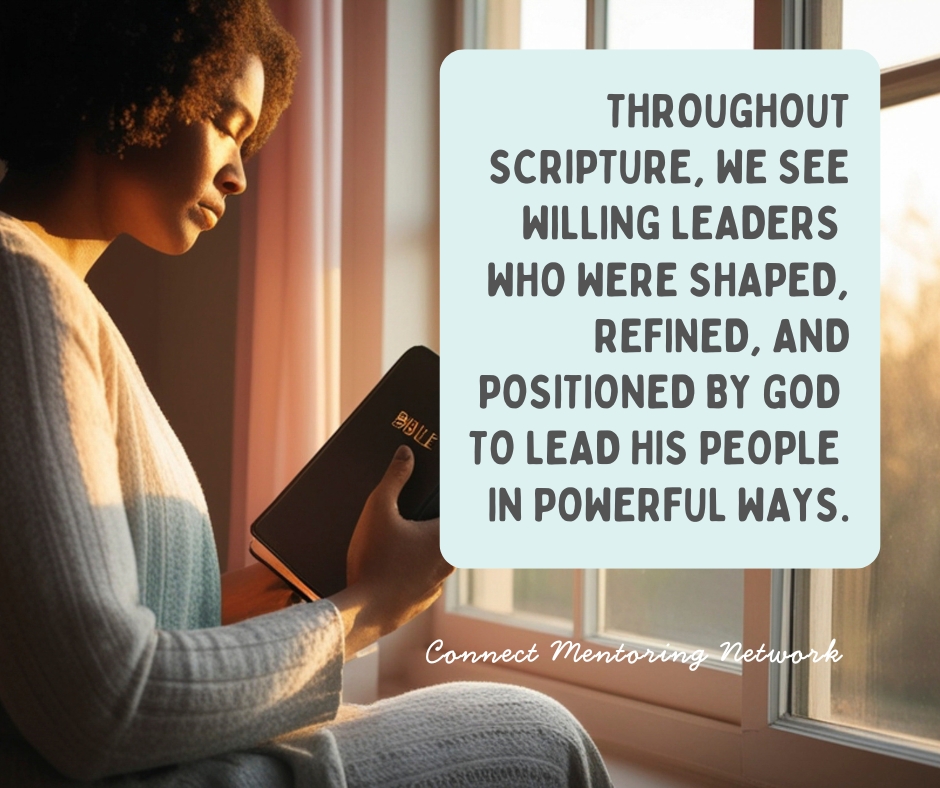
Throughout Scripture, we don’t see perfect leaders—we see willing ones. Men and women who were shaped, refined, and positioned by God to lead His people in powerful ways. Biblical leadership isn’t built on charisma, influence, or personality. It’s formed through surrender, obedience, and a deep reliance on God.
If you’ve ever wondered what biblical leadership really looks like in action, the Bible doesn’t leave you guessing. It gives us real people, real challenges, and real faith.
In this post, we’re looking at three leaders—Moses, Nehemiah, and Deborah—whose lives highlight hallmark traits every Christian leader can practice today.
Biblical Leadership Example: Moses, Dependence on God
If there were ever a leader who felt unqualified, it was Moses.
He doubted his ability to speak, questioned his calling, and even asked God to send someone else. And yet—God chose him anyway. Not because of his strength, but because of his willingness to depend fully on Him.
Moses’ leadership was marked by one defining trait: dependence on God.
Moses Sought God Continually
Moses didn’t make decisions based on his own understanding—he consistently sought the Lord for direction.
“If you are pleased with me, teach me your ways so I may know you and continue to find favor with you. Remember that this nation is your people.” Exodus 33:13 (NIV)
This wasn’t a one-time prayer. It was a lifestyle.
Moses understood something every leader must learn: knowing God is more important than knowing what to do. When you know God, He reveals the next step.
Moses Led from God-Confidence, Not Self-Confidence
Moses’ strength wasn’t found in his ability—it was found in God’s presence.
Even while leading a difficult and often rebellious group of people, Moses returned again and again to the Lord for guidance, wisdom, and reassurance.
He didn’t pretend to have all the answers. He stayed connected to the One who did.
Moses Delegated Responsibility
As Moses grew in responsibility and authority, he also became burdened in a way God never intended.
In Exodus 18:13–27, we find him sitting from morning until evening, personally judging every dispute among the Israelites. What may have started as a desire to lead well had slowly turned into something unsustainable.
When his father-in-law observed this, he recognized the strain immediately and spoke truth in love: “The thing you are doing is not good… You are not able to do it alone” (Exodus 18:17–18).
He then offered wise, practical counsel—appoint capable leaders, divide the responsibility, and allow others to help carry the load.
“…it will be easier for you, and they will bear the burden with you. If you do this, God will direct you, you will be able to endure” (Exodus 18:22–23).
If you’ve ever hesitated to ask for help or found yourself thinking, “It would just be easier if I did it myself,” you’re not alone. Moses wrestled with that same tension.
But this moment reveals an important truth about biblical leadership: it isn’t about doing everything—it’s about stewarding what God has entrusted to you wisely.
Sharing the burden requires humility. Releasing control requires trust.
And Moses, in this moment, chose both.
Leadership Takeaway
You don’t have to have all the answers—you just have to stay connected to the One who does.
Biblical leadership begins with dependence. When you rely on God, you lead from a place of peace instead of pressure.
Biblical Leadership Example: Nehemiah, Vision and Action
Nehemiah’s story is one of burden, vision, and bold execution.
When he heard that Jerusalem’s walls were broken and its people were vulnerable, he didn’t just feel compassion—he allowed that burden to move him into action.
Nehemiah models a powerful truth about biblical leadership: godly leaders don’t just feel—they build.
Nehemiah Began with Prayer
Before Nehemiah made a move, he sought God.
“When I heard these things, I sat down and wept. For some days I mourned and fasted and prayed before the God of heaven.” Nehemiah 1:4 (NIV)
He didn’t rush into action. He paused in prayer.
This is a critical piece of biblical leadership—your strategy should always be birthed in prayer.
Nehemiah Combined Faith with Strategy
After praying, Nehemiah didn’t remain passive. He developed a plan and took action.
"…Come, let us rebuild the wall of Jerusalem… So they began this good work.” Nehemiah 2:17–18 (NIV)
Nehemiah assessed the situation, gathered people, communicated vision, and led with clarity.
He didn’t just hope something would change—he led the change.
Nehemiah Persisted Through Opposition
Leadership is rarely easy, and Nehemiah faced intense opposition.
Yet he stayed focused.
“So we rebuilt the wall… for the people worked with all their heart.”
Nehemiah 4:6 (NIV)
Even when discouraged or threatened, Nehemiah continued the work God had called him to do. And it’s important to recognize this: you can be sincere in your calling, faithful in your work, and fully committed—and still face opposition.
Resistance is not always a sign you’re off track. Sometimes, it’s confirmation that the work matters.
Nehemiah Carried What Was Necessary
The opposition didn’t stop—but neither did the work.
Throughout Nehemiah 4, the threats, taunts, and plots continued. And yet, Nehemiah and the people pressed on with wisdom and resolve:
“Those who carried burdens were loaded in such a way that each labored on the work with one hand and held his weapon with the other… each of the builders had his sword strapped at his side while he built.”
Nehemiah 4:17–18
They were building with one hand—and prepared with the other.
A tool was necessary. A weapon was also necessary.
Nehemiah refused to be distracted or deterred. He led by example, showing that biblical leadership requires both focus and discernment—knowing when to build and when to stand firm.
Leadership Takeaway
Godly leaders don’t just feel burden—they build with purpose.
Biblical leadership requires both vision and action. Prayer positions you, but obedience moves you forward.
Biblical Leadership Example: Deborah, Courage to Lead Boldly
Deborah stands out as a powerful example of courage, wisdom, and authority.
At a time when female leadership was uncommon, Deborah stepped fully into her calling—not because culture made room for her, but because God did.
Her life reminds us that biblical leadership isn’t about fitting expectations—it’s about fulfilling God’s calling.
Deborah Led with Clarity and Authority
Deborah served as both a prophet and a judge over Israel. People came to her for wisdom, and she led with spiritual authority.
“Now Deborah, a prophet… was leading Israel at that time…” Judges 4:4–5 (NIV)
She didn’t shrink back. She stepped fully into her role.
Deborah Called Others Into Action
Deborah didn’t just lead alone—she empowered others.
She called Barak into obedience and reminded him of God’s command.
“The Lord… commands you: ‘Go…’” Judges 4:6 (NIV)
Deborah understood something powerful: leadership isn’t about doing everything yourself—it’s about calling others into obedience.
Deborah Backed Up Her Words with Action
When Sisera threatened Israel, Deborah called Barak and reminded him that God had already ordained the victory. She urged him to step into the battle—but Barak hesitated.
His response reveals the tension in the moment: “If you will go with me, I will go, but if you will not go with me, I will not go” (Judges 4:8).
Where others operated in fear, Deborah stood firm.
“And she said, ‘I will surely go with you. Nevertheless, the road on which you are going will not lead to your glory, for the Lord will sell Sisera into the hand of a woman.’ Then Deborah arose and went” (Judges 4:9)
She didn’t just speak with authority—she followed through with action. Deborah was willing to go, to stand, and to lead alongside him. Her leadership wasn’t passive; it was present.
As we can always truth Him to do, God honored her obedience.
Deborah Had Confidence in God
Deborah knew who she was—and more importantly, she knew who God had called her to be.
She stood in the authority God had given her, and her confidence became contagious. What began as hesitation in Barak shifted into action under her leadership.
“Up! For this is the day in which the Lord has given Sisera into your hand. Does not the Lord go out before you?” (Judges 4:14, NIV)
And then—he moved. Barak went, and Sisera was defeated.
Deborah’s confidence wasn’t in the situation—it was in God’s promise. That’s a foundation that never fails.
Leadership Takeaway
Don’t shrink back from what God has called you to—lead with boldness, clarity, and confidence in Him.
Biblical leadership requires courage. You can find confidence in the knowledge that when God calls you, He also equips you.
Hallmark Traits of Biblical Leadership
Each of these leaders reveals an essential aspect of biblical leadership:
- Moses → Dependence on God
- Nehemiah → Intentional action
- Deborah → Courageous leadership
These traits aren’t reserved for a select few—they’re available to every believer willing to follow God wholeheartedly.
Dependence keeps you grounded.
Action keeps you moving.
Courage keeps you faithful.
Living Out Biblical Leadership Today
You don’t have to be leading a nation, rebuilding a city, or commanding an army to walk in biblical leadership.
You are called to lead right where you are.
In your home.
In your workplace.
In your ministry.
In your relationships.
Take a moment and ask yourself:
- Am I depending on God daily?
- Am I taking action on what He’s asked me to do?
- Am I leading with courage, even when it’s uncomfortable?
Biblical leadership isn’t about perfection—it’s about obedience.
Biblical Leadership: Final Encouragement
God has always used imperfect people to accomplish His perfect plans.
Moses doubted.
Nehemiah faced opposition.
Deborah stepped into unfamiliar territory.
And still—God used each of them powerfully.
He will use you too.
Stay dependent.
Take action.
Lead with courage.
That is biblical leadership.
For a free resource and weekly encouragement, visit Connect Mentoring Network. You can also subscribe to Jennifer W. Spivey on YouTube so you don’t miss the weekly podcast.
Looking for a Christian mentor? Spring enrollment is open now - and we have a spring special going on! I’d love to connect with you.
I’ll see you Thursday on the podcast and next week right here on the blog. Until then, remember: you are a leader. Whether you realize it or not, someone is following you—so lead well!

Legal
Privacy Policy2025 - Copyright. All Rights Reserved. Made by Arising Co.