How to Set Boundaries as a Christian Woman 2: How to Implement and Maintain Boundaries with Grace and Without Guilt
Last week, we started our series on how to set boundaries with needed background information: what boundaries are, why we set boundaries, and where we set boundaries. If you missed it, take a minute to catch up here - it will be worth your time!
However, we left it on a cliffhanger: we didn’t get into the real how-to. Now that we have talked about the what, why, and where, let’s get into the how of how to set boundaries!
We all have full lives, full hearts, and full calendars, don’t we? There’s always one more thing to do, one more person to help, one more need to meet. However, even with the best intentions, we simply cannot pour from an empty cup. Your time, energy, and emotional capacity are gifts from God. He gave you 24 hours, and how you use that time is a matter of stewardship.
How to Set Boundaries: How to Set Boundaries With Grace
Sometimes the hardest part of boundaries is the moment you actually voice them. Saying “no” or expressing a limit can feel scary, awkward, or even unkind. Maybe a friend wants you to take her children to school every day, or your pastor hopes you’ll take on a big responsibility at church. These are good things—and it’s a compliment to be considered. But your true power, superwoman, is in being able to follow the leading of the Holy Spirit. Don’t get tangled in that cape!
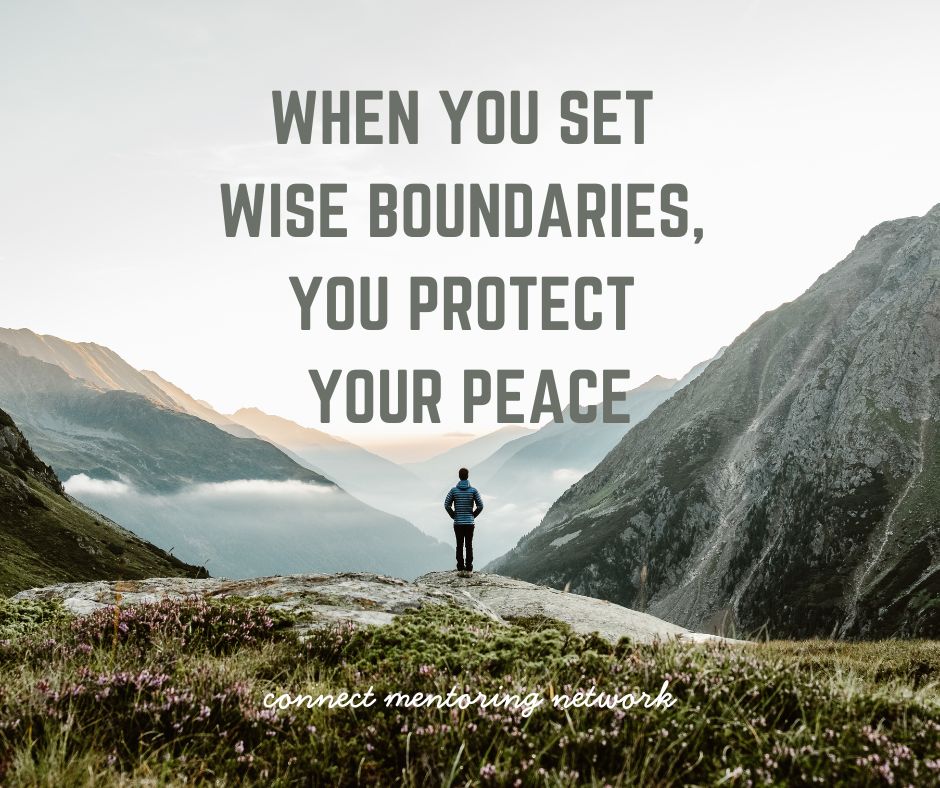
With God’s help, it is possible to learn how to set boundaries with gentleness, confidence, and grace. And when you do, something beautiful happens: you protect your peace, and your relationships become healthier, clearer, and more rooted in truth. Boundaries don’t push people away—when done well, they create space for growth.
When you invite Him into your schedule and ask, “Lord, what have You given me grace for today?” He will faithfully show you where your limits are… and where your “yes” will bring Him glory.
Speak the Truth in Love
In Ephesians 4:15, Paul encouraged believers to “speak the truth in love.” In the practical, everyday work of learning how to set boundaries, here are a few helpful phrases:
- “I can’t take that on right now, but I can help in this way…”
- “I need to focus on this priority and won’t be available at that time.”
- “This is a wonderful idea! I’m not called to participate right now, but you can count on me for prayer support!”
Friend, you are playing to an audience of One. The only expectations you need to meet are the ones your loving Heavenly Father has for you. This isn’t a cookie-cutter process—the gifts and callings on our lives are as varied and unique as we are.
I can’t tell you whether to coach the ball team, start the blog, or teach the music lesson. I can’t even tell you whether to stop any of these things. That’s the role of the Holy Spirit. Lean into Him and refuse to feel guilty for following His leading.
Pray and Discern God’s Guidance
Before you set any boundary—or even decide where your yes or no should go—take a moment to slow down and breathe with the Lord. Life pulls at us from a hundred directions, and it’s easy to say yes out of habit, pressure, or guilt. When you pause long enough to pray, you create space to hear God’s gentle, steady voice above the noise.
Ask Him to show you where you’re stretched too thin, where your heart needs rest, and which relationships require healthier rhythms. Invite the Holy Spirit to shine a light on the gifts He’s given you and how He wants you to steward them with joy, not exhaustion.
Scripture reminds us, “If any of you lacks wisdom, you should ask God… and it will be given to you” (James 1:5). That’s a promise you can lean on. As you pray, trust that God will clarify what drains you, what strengthens you, and what He is lovingly asking you to protect. Boundaries aren’t just practical—learning how to set boundaries is deeply spiritual.
Identify Your Non-Negotiables
Healthy boundaries start with clarity—specifically, clarity about what you will not compromise. Your non-negotiables might include daily time with God, meaningful connection with your family, restorative rest, or protecting your emotional and mental well-being.
When you name these priorities, it becomes easier to recognize when something (or someone) is pulling you away from what God has entrusted to you.
Even Jesus had well-meaning people around Him who unintentionally tried to redirect His day. In Mark 1:32–39, Jesus withdraws to a solitary place to rest after a powerful time of ministry. When the disciples find Him, they want Him to stay and continue healing—but Jesus knew His purpose. He responds kindly and firmly, saying He must go to the next towns to preach, “because for this purpose I have come” (1:38).
There will always be someone ready to tell you the “best” use of your time. Jesus gives us a powerful example: when the moment calls for it, it’s vital to know how to set boundaries.
Communicate Clearly and Kindly
Once you know what your boundaries are, communicating them with grace is key. Using “I” statements helps you express your needs without blaming or shaming others. Pair these with speaking the truth in love, which keeps your tone honest yet compassionate.
For example: “I’m not able to commit to that right now, but thank you for thinking of me.”
This reflects the biblical call to let our words be both truthful and gracious. Clear communication honors God, respects others, and helps you maintain the limits He has led you to set.
Learning how to set boundaries with grace helps Christian women communicate clearly, honor God, and protect their peace without guilt or fear.
How to Set Boundaries: Overcoming Guilt and Fear Regarding Boundaries
When we understand how to set boundaries as an act of biblical stewardship, everything becomes clearer. This isn’t about being selfish—it’s about aligning your priorities with God’s priorities and honoring what He has entrusted to you.
Why Christian Women Often Feel Guilty Saying No
Many Christian women struggle to say no because of internalized beliefs that putting themselves first is selfish or unloving. The fear of rejection, disappointing others, or failing to meet expectations can create a constant undercurrent of guilt and anxiety.
Yet God never calls us to burnout, martyrdom, or overextension. He calls us to faithful stewardship of the life, time, and energy He has given us.
When you see “no” as obedience rather than selfishness, everything shifts. Recognizing that learning how to set boundaries helps you care for the life God gave you reframes things: you become more able to serve with joy, rest, and emotional wholeness rather than from a place of depletion.
Scripture Support for Healthy Limits
Scripture reminds us that our bodies and lives ultimately belong to God—and caring for ourselves honors Him:
“Do you not know that your bodies are temples of the Holy Spirit, who is in you…? You are not your own; you were bought at a price. Therefore honor God with your bodies.” 1 Corinthians 6:19–20
Practically, this means that taking time to rest, recharge, and even say no to certain demands is not rebellion—it is worship.
Observing a Sabbath, creating margin for prayer, or simply taking a day to refresh are acts of obedience that glorify God while protecting your physical, emotional, and spiritual health. Healthy boundaries reflect a heart that wants to honor God purposefully, not frantically.
Practical Ways to Release Guilt and Walk in Freedom
Releasing guilt around boundaries often begins with remembering that God’s love is unconditional—not earned through performance. Replace thoughts of obligation with reminders of stewardship: your time, energy, and relationships are gifts from God to be managed with wisdom.
A few practices that help build confidence:
- Journal your priorities so you can clearly see what God is calling you to focus on.
- Pray before committing so your yes and no flow from discernment, not pressure.
- Practice small boundaries to strengthen your confidence—say no to minor requests or create short pockets of protected time.
- Surround yourself with supportive people who respect your limits and reinforce healthy patterns.
Learning how to set boundaries frees you to walk in peace rather than guilt. Honoring yourself through healthy limits ultimately honors God.
How to Set Boundaries: Maintaining Boundaries Consistently
Now that we have discussed how, it's important that as we begin to implement boundaries, those boundaries are maintained. Here are a few helps:
Surround Yourself With People Who Respect Your Limits
When learning how to set boundaries that last, the people around you matter. Surround yourself with supportive friends, family, and leaders who respect your limits and honor your “yes” and “no.”
Even in Mark 1:32–39, Jesus is surrounded by His disciples—men who loved Him, supported Him, and were eager to serve God alongside Him. They made a suggestion, Jesus clarified His mission, and together they traveled to the next town in unity.
This shows us an important truth: healthy relationships can handle boundaries. People can offer suggestions, and you can choose to accept or decline—while maintaining mutual honor and respect.
However, if someone consistently pushes back, manipulates, or becomes resentful after you’ve communicated your boundary kindly, that may be a signal to set a boundary around the relationship itself. Protecting your emotional and spiritual health is wise stewardship, not selfishness.
Scripture Emphasis: Proverbs 25:28
Proverbs 25:28 teaches, “Like a city whose walls are broken through is a person who lacks self-control".
In biblical times, a city without walls was vulnerable to attack. Likewise, a life without boundaries is vulnerable to exhaustion, resentment, and confusion. Just as walls protect a city, boundaries protect your peace, purpose, and God-given priorities. Understanding how to set boundaries is key to living with strength and stability.
Review and Adjust Boundaries as Life Changes
As seasons shift, your boundaries will shift too—and that’s healthy. For example: when your children are small, your routines and responsibilities naturally orient around their needs. When they leave for college, start careers, or build families of their own, your time and calling look different.
Your life is not static, and your boundaries shouldn’t be either.
Regularly review your commitments to make sure they align with what God is asking of you in this season. Adjustments aren’t a sign of inconsistency; they’re a sign of maturity, wisdom, and responsiveness to the Holy Spirit.
Learning how to set boundaries and then maintain them consistently helps Christian women protect their time, nurture their relationships, and safeguard their well-being—while living with intention and spiritual clarity.
How to Set Boundaries: Conclusion
Boundaries are a biblical, loving way to protect your heart, your time, and your relationships. They help you walk in wisdom, steward your energy, and stay aligned with God’s calling for your life. As you move forward, consider choosing one area this week where a boundary is needed, and ask the Lord to guide you with clarity and peace.
Here are a few next steps to help you continue growing:
- Explore the Connect Mentoring E-Course on Developing a Rule of Life—a wonderful resource for shaping rhythms that support healthy boundaries
- Visit www.connectmentoringnetwork.org to access additional tools, or sign in to receive a free e-book on spiritual friendship.
- Join the conversation on the Connect Podcast every Thursday—subscribe to @JenniferWSpivey on YouTube so you never miss an episode.
As you grow in confidence and learn how to set boundaries with grace, you’ll discover that the balance, peace, and freedom that follow are true gifts from God.
You don’t have to do this alone, and you don’t have to figure it out all at once. One prayerful step at a time is more than enough. 💛 As you grow in confidence and learn how to set boundaries with grace, you’ll discover that the balance, peace, and freedom that follow are treasures!
Legal
Privacy Policy2025 - Copyright. All Rights Reserved. Made by Arising Co.