Using Your God-Given Gifts: Don't Bury What God Entrusted to You
You have wisdom, talents, experiences, and opportunities that God can use to make a difference in the lives of others. But are you putting them to work? Using your God-given gifts isn't just about fulfilling your potential; it's about faithfully stewarding what God has entrusted to you and making yourself available for His purposes.
Last week, we continued our new series by looking at the importance of working together rather than trying to carry the weight of ministry alone. God has entrusted each of us with gifts, opportunities, and a calling—and we can accomplish so much more when we invite others into the work. If you missed that post, I encourage you to go back and read it here before continuing with us!
Have you ever looked at someone else's ministry, writing, leadership, or accomplishments and thought, I could never do that?
Maybe you've felt God prompting you to write something, teach something, lead something, or share a part of your story. But then the questions start:
Am I qualified? What if I fail? What if nobody listens? What if someone criticizes me? What if I'm not good enough?
So you wait. You tell yourself you'll begin when you have more experience, more confidence, more time, or a little more clarity.
Meanwhile, the gift remains unused. The idea stays in your notebook. The opportunity passes. And the people who might have been encouraged, equipped, or strengthened through your obedience never receive what you could have offered. Using your God-given gifts isn't just about fulfilling your potential; it's about making yourself available for what God wants to do through you.
Today, I want to challenge you with a question: What has God entrusted to you that you're still burying?
Using Your God-Given Gifts: A Gift Is a Responsibility
In Matthew 25:14–30, Jesus tells the parable of the talents. A master entrusts his servants with resources before leaving on a journey. Each receives an amount according to his ability.
When the master returns, he calls the servants to account for what they did with what they received.
Two servants put their talents to work and are commended. The third servant, however, buries his talent in the ground. He explains that he was afraid.
The master rebukes him for failing to put what he received to work.
This parable reminds us that stewardship involves responsibility. The question isn't simply what we've been given, but what we do with it.
Notice that the servants weren't all entrusted with the same amount. Their circumstances and assignments differed. But each was responsible for what had been placed in his hands.
That matters because comparison can distract us from our own stewardship.
We can spend so much time looking at someone else's gifts that we neglect our own. We may wish we had another person's platform, opportunities, personality, or abilities. We may convince ourselves that what we have to offer isn't significant enough to matter.
But God hasn't asked you to be someone else. He's asking you to be faithful with what He's entrusted to you.
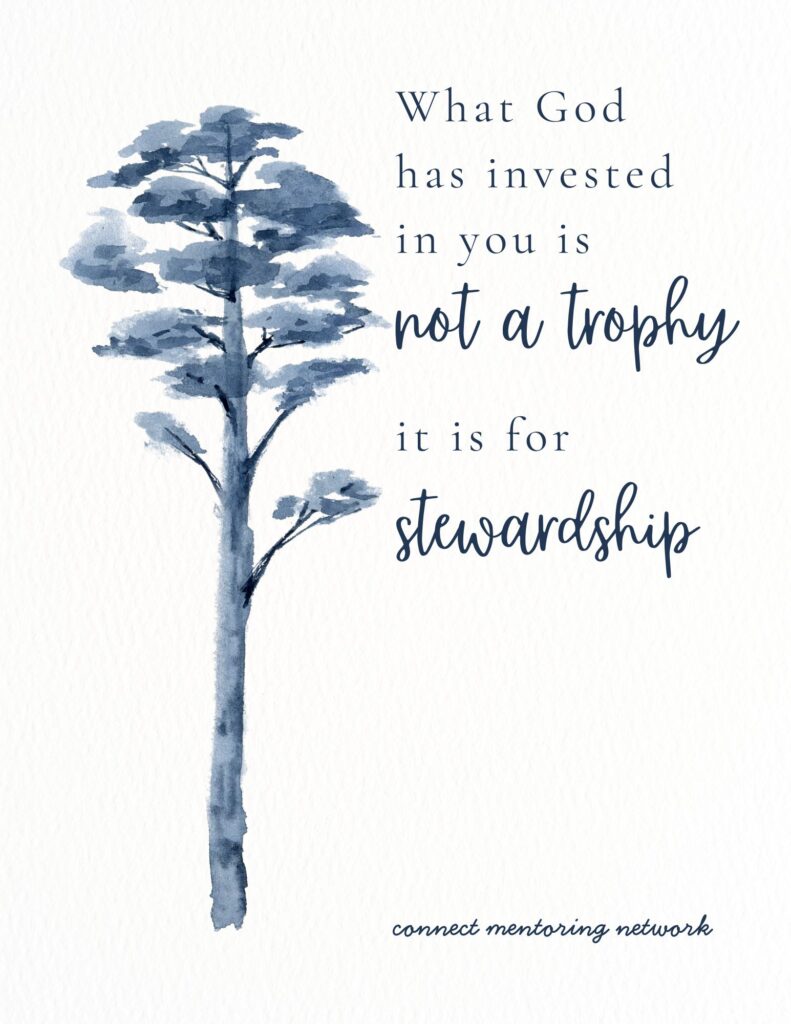
What God has invested in you is a stewardship, not a trophy.
Your gifts aren't simply things to admire. Your knowledge isn't meant to accumulate dust. Your experience isn't valuable only because it makes an interesting story.
These are things you can put to work for God's purposes.
Using Your God-Given Gifts: What Has God Placed in Your Hands?
When we hear the word talent, we may immediately think about a remarkable ability: singing, preaching, writing, teaching, or leading - but I want you to think more broadly about what God has entrusted to you: Perhaps you have years of experience in ministry. You've learned how to navigate difficult conversations, care for people in crisis, lead a team, or recognize the warning signs of an unhealthy situation.
Perhaps you've walked through a season that taught you perseverance, patience, forgiveness, or dependence on God.
Maybe you have a knack for organization, a heart for mentoring, a gift for encouraging people, or an ability to explain complicated ideas in a way that makes sense. Maybe you've learned something that could save someone else years of frustration.
You may not think of these things as particularly impressive. You may even assume that everyone knows what you know.
Friend, that's not necessarily true.
The lessons you learned through experience might be exactly what someone else needs to hear. The processes you've developed could help another leader work more effectively. The encouragements you offer naturally might be the very thing that helps someone keep going.
Part of using your God-given gifts is recognizing that what you've learned along the way may be just as valuable as what comes naturally to you. God can use your abilities, your experiences, and even the lessons you learned through difficult seasons to encourage and strengthen others.
Don't underestimate what God can do with what you already have. You don't need to possess every gift. You don't need to know everything. You don't have to wait until you've reached some imaginary level of expertise before you begin serving others.
Start with what God has placed in your hands.
Using Your God-Given Gifts: Fear Is Not a Reason to Bury Your Gift
Let's return to the servant who buried his talent. His explanation was simple: he was afraid.
Fear can be a powerful reason for inaction. It can convince us that doing nothing is safer than taking a risk. It can make us believe that if we never begin, we'll never fail.
However, not beginning has consequences as well.
If you never share what you've learned, someone may miss an opportunity to grow. If you never develop your gift, you may never discover what God can do through it. If you never take the first step, you may remain stuck in preparation while the work remains undone.
This doesn't mean we should ignore wisdom, rush into every opportunity, or assume every idea is a divine assignment. We need prayer, discernment, wise counsel, and a willingness to learn.
Once you've prayerfully discerned what God is asking you to do, fear shouldn't automatically have the final word. Using your God-given gifts doesn't mean you'll always feel confident or have every detail figured out. It means choosing faithfulness over fear and trusting God to work through you as you take the next step.
Two things can be true here: You can feel nervous and still be obedient. You can be inexperienced and still take a first step. You can acknowledge what you don't know and be faithful with what you do know.
You can learn as you go.
Remember Nehemiah (a couple of blogs: here and here)? He didn't simply feel burdened about Jerusalem's walls and hope someone else would rebuild them. He prayed, developed a plan, gathered people, and got to work.
Faithfulness doesn't require you to have every answer before you begin. It requires you to respond to what God has placed before you.
Using Your God-Given Gifts: Put Your Gift to Work
So what does this look like in everyday life?
It might mean finally writing the book you've been talking about for years.
It might mean offering to teach a class, lead a small group, or share what you've learned with younger leaders.
It might mean using your experience to mentor someone who's walking through a season you've already navigated.
It might mean creating a resource, starting a ministry, developing a skill, or saying yes to an opportunity that aligns with your calling.
Sometimes putting your gift to work begins with something small. Sometimes, using your God-given gifts begins with recognizing a need right in front of you and asking how you can help. You don't have to wait for a formal invitation or a bigger opportunity to begin making a difference.
You don't have to launch a large ministry to encourage someone. You don't need a publishing contract to write something meaningful. You don't need a massive platform to make a difference in someone's life.
You can begin by serving one person. You can share one lesson. You can take one step.
And then another. And then another.
Faithfulness often looks much more ordinary than we imagine. It's showing up, doing the work, learning from mistakes, and continuing to make yourself available to God's purposes.
Don't wait for a bigger platform before you start using what God has given you. Start being faithful where you are.
Using Your God-Given Gifts: Your Gift Was Never Meant to End With You
Here's where I want to take this one step further: using your gifts isn't only about personal accomplishment. It's also about what you can pass along to others.
In 2 Timothy 2:2, Paul tells Timothy to entrust what he has learned to faithful people who will be able to teach others also.
Paul understood the power of multiplication. What Timothy received wasn't supposed to stop with Timothy. He was to invest it in others, who would then invest it in still more people.
Think about the people who have helped you grow. Someone taught you. Someone encouraged you. Someone opened a door, shared a lesson, or believed in you when you weren't sure of yourself.
What if they had kept everything they knew to themselves?
What if they had decided that teaching someone else might create competition? What if they had buried their gifts because they didn't feel qualified?
You might not have received the same encouragement, wisdom, or opportunity.
Now it's your turn to consider who might benefit from your investment.
If you know how to do something, teach someone else.
If you've learned something the hard way, help someone avoid the same mistake.
If you've developed a resource that could help others, share it.
If you've been given influence, use it to encourage and equip people.
If you have the opportunity to mentor someone, don't assume you need to know everything before you can begin.
You don't have to be at the end of your journey to help someone else take the next step on theirs.
Your gift can serve people directly through your own work. It can also continue producing fruit through the people you equip. Using your God-given gifts also means recognizing the opportunities you have to encourage, equip, and strengthen other women in ministry.
The real measure of what you carry may be what continues growing after you've passed it along.
Using Your God-Given Gifts: Unbury the Gift
Let's make this practical. Set aside a few minutes to pray and answer these questions honestly.
First, what has God entrusted to me?
- Think about your gifts, knowledge, experiences, relationships, opportunities, and the lessons you've learned along the way.
Second, what have I been afraid to do with it?
- Is fear of failure holding you back?
- Are you comparing yourself with someone else?
- Are you waiting to feel completely ready?
Third, who could benefit if I put this gift to work?
- Think of a person, a group, a ministry, or a community that could be strengthened by what you have to offer.
Finally, what is one action I can take this week?
- Don't stop with a list of good intentions.
- Choose a practical step.
- Write the first page.
- Make the phone call.
- Offer to help.
- Schedule the meeting.
- Begin developing the resource.
- Reach out to the person you could mentor.
Pray for wisdom. Make a plan. Ask God for courage and discipline. Then take the next step.
You don't have to do everything at once. You simply need to stop letting fear keep you from being faithful with what God has given you.
God has invested in you. Don't bury it.
Put it to work. As you do, look for opportunities to invest in others, because what God has entrusted to you may be the very thing He wants to use to strengthen someone else.
Using Your God-Given Gifts: Next Steps
God hasn't entrusted you with gifts, wisdom, and experience simply for you to keep them to yourself. Using your God-given gifts means faithfully putting them to work for His glory and investing in the lives of others.
Want to keep the conversation going? Come join me on the podcast this Thursday for a deeper look at these ideas, and subscribe to my YouTube channel to stay connected with each new episode.
You’ll also find plenty of encouragement and practical resources at Connect Mentoring Network, where my heart is to help women grow in their walk with Christ and flourish in their ministry and leadership. Whether you’re facing new challenges, developing your leadership gifts, or simply longing for a deeper faith, I hope you’ll find something there that speaks to your season.
Until then, keep putting what you’re learning into practice! I look forward to meeting you back here on the blog next week as we continue this series. See you Thursday on the podcast!
Legal
Privacy Policy2025 - Copyright. All Rights Reserved. Made by Arising Co.