How to Heal and Forgive After Betrayal Trauma 1: You Are Not Alone
Few pains cut as deeply as betrayal trauma.
When trust is broken by someone you loved, respected, depended on, or believed in, it can leave emotional wounds that feel impossible to explain. Betrayal reaches into the deepest parts of the heart because it attacks safety, trust, identity, and security all at once.
If you are searching for how to get over betrayal trauma, you may already know this pain intimately. Maybe you are carrying the shock of infidelity, abandonment, deception, rejection, manipulation, spiritual abuse, or broken trust from someone you never imagined would hurt you.
And if you are honest? You probably feel incredibly alone.
Betrayal has a way of isolating us. It whispers that no one understands. It convinces us our story is too complicated, too painful, too humiliating, or too unique for anyone else to truly comprehend.
But Scripture tells a different story.
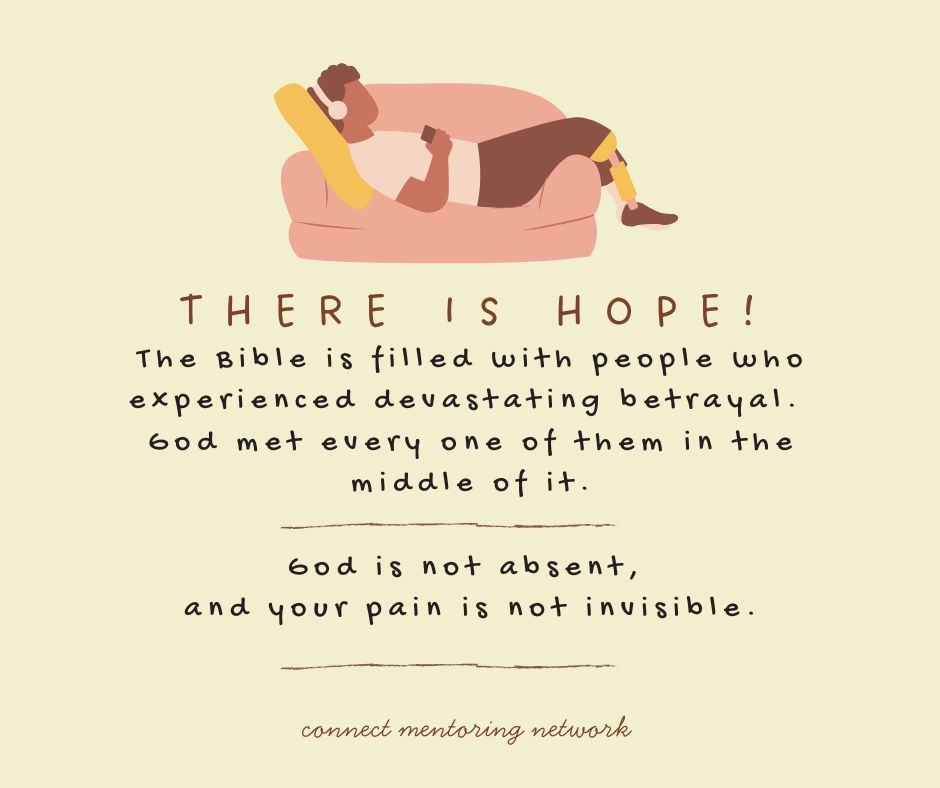
The Bible is filled with people who experienced devastating betrayal. Hang with me, though! The Bible is also filled with hope: God met every one of them in the middle of it. Their stories remind us that betrayal is not new, God is not absent, and your pain is not invisible.
If you have experienced the pain of betrayal, I’m praying for you as you journey through this pain. Please hear this clearly today: You will recover.
What Is Betrayal Trauma?
Before we talk about how to get over betrayal trauma, we need to understand what betrayal trauma actually is.
Betrayal trauma occurs when someone you trusted deeply violates that trust in a significant way. Because relationships are tied to safety and emotional connection, betrayal often affects not only the heart, but also the mind, body, and spirit.
Betrayal trauma may involve:
- Marital unfaithfulness
- Emotional affairs
- Lying and deception
- Abandonment
- Spiritual manipulation
- Broken confidences
- Financial betrayal
- Ministry betrayal
- Friendship wounds
- Family rejection
Betrayal can leave people feeling:
- Unsafe
- Confused
- Angry
- Hypervigilant
- Emotionally numb
- Anxious
- Deeply grieved
Sometimes people minimize betrayal because there are no physical bruises attached to it. However, emotional and spiritual wounds are real wounds.
At the same time, it is important to understand that not every disappointment is betrayal. Someone disagreeing with you, setting boundaries, or failing to meet every expectation does not automatically mean they betrayed you.
True betrayal involves a breaking of trust, covenant, loyalty, or protection where safety and love were expected.
When it happens, the pain is real.
Why Betrayal Trauma Makes You Feel So Alone
One of the cruelest parts of betrayal trauma is the isolation it creates. You may be surrounded by people and still feel completely alone in your suffering.
Part of that loneliness comes from the deeply personal nature of betrayal. Your story is specific. Your relationship mattered. Your wounds are tied to memories, promises, and trust that belonged uniquely to you.
That matters. Your feelings are valid.
Sometimes Christians feel pressured to “just forgive and move on” without honestly acknowledging the devastation betrayal causes. But healing cannot happen where pain is denied.
God is not intimidated by your grief.
He is near to the brokenhearted.
Sometimes one of the first steps in healing is simply realizing: You are not the only person who has walked this road.
Scripture Is Filled With Stories of Betrayal Trauma
The Bible does not hide human pain. In fact, many of the people God used most powerfully experienced deep betrayal.
Their stories remind us that betrayal does not disqualify you from God’s love, calling, or future.
Lucifer Betrayed God
One of the earliest betrayals in Scripture occurred in heaven itself.
Lucifer, once created beautiful and glorious, rebelled against God in pride and arrogance. Isaiah 14:12–15 and Revelation 12:7–9 describe his fall and rebellion against the Lord.
Imagine the heartbreak of betrayal originating in the very presence of God. Yet even this rebellion did not overthrow God’s authority or interrupt His ultimate plan.
This matters because betrayal often makes us feel like everything has spun out of control. But please remember: God has never once lost control of history—not in heaven, not in Scripture, and not in your life.
David Was Betrayed by Saul
David faithfully served Saul. He fought for him, honored him, and refused to harm him even when given opportunities to do so.
Yet Saul responded with jealousy, suspicion, and relentless pursuit.
First Samuel chapters 18 through 24 reveal a painful reality: sometimes you can love people sincerely and still be wounded by them.
David experienced:
- False accusations
- Threats
- Rejection
- Fear
- Emotional exhaustion
Perhaps hardest of all, David was betrayed by someone he once respected and trusted.
Still, David continued bringing his pain to God.
The Psalms show us that healing begins when we stop pretending and start praying honestly.
David cried.
David questioned.
David grieved.
David worshipped anyway.
True to His character, God remained faithful through every season.
Joseph Was Betrayed Repeatedly
Joseph’s story may be one of the clearest biblical pictures of betrayal trauma.
His own brothers betrayed him out of jealousy. They threw him into a pit, sold him into slavery, and lied to their father about his fate.
As if that were not enough, Joseph was later falsely accused by Potiphar’s wife and forgotten in prison by those he helped.
Betrayal after betrayal after betrayal.
If anyone could have become bitter, hopeless, or consumed by revenge, it was Joseph.
Yet Genesis 37 and Genesis 39–41 reveal something powerful:
God never abandoned him.
Not even in slavery.
Not even in prison.
Not even in isolation.
Joseph’s story reminds us that betrayal may delay things, but it cannot destroy God’s purpose for your life.
People may misunderstand you.
People may lie about you.
People may walk away from you.
You can be assured of this: God still knows exactly where you are.
Jesus Was Betrayed by Judas
Perhaps the most heartbreaking betrayal in Scripture is the betrayal of Jesus.
Judas walked with Him.
Learned from Him.
Witnessed miracles.
Shared meals with Him.
After all this, Judas still chose betrayal.
Matthew 26:14–16 and 47–50 describe the devastating moment Judas identified Jesus with a kiss—a symbol of affection twisted into betrayal.
Jesus understands betrayal personally.
He understands:
- Rejection
- Abandonment
- False accusations
- Broken trust
- Public humiliation
This is why you can bring your pain honestly to Him. There is no wound you carry that He cannot understand.
When you pray through betrayal trauma, you are not praying to a distant Savior unfamiliar with grief. You are praying to One who has suffered too.
God’s Plan Cannot Be Stopped - Not Even By Betrayal Trauma!
One of the greatest fears betrayal trauma creates is this:
“What if this ruins everything?”
What if my reputation is ruined?
What if my future is ruined?
What if my calling is ruined?
What if I never recover?
But Scripture repeatedly proves that betrayal does not have the final word.
Joseph still fulfilled his purpose.
David still became king.
Jesus still accomplished redemption.
God’s plans for your life are not fragile. People do not have the power to cancel what God has ordained.
That does not mean betrayal trauma does not hurt. It does not mean consequences disappear overnight. It does not mean healing is instant.
But it does mean this: Your destiny is safer in God’s hands than in human hands.
Your purpose did not begin with people’s approval, and it will not end because of their betrayal.
Romans 8:28 reminds us that God works all things together for good for those who love Him and are called according to His purpose.
Even this pain.
Even this heartbreak.
Even this chapter.
How to Get Over Betrayal Trauma Starts With Bringing It to God
Many people searching for how to get over betrayal trauma are looking for quick relief from overwhelming pain.
But biblical healing is not denial, avoidance, or pretending you are unaffected.
Healing begins with honesty.
God invites you to:
- Grieve honestly
- Pray openly
- Process wisely
- Seek godly support
- Allow Him into the deepest parts of the wound
You do not heal betrayal trauma by stuffing it down spiritually.
You heal by allowing God to meet you inside it.
Sometimes healing also involves:
- Counseling
- Mentorship
- Healthy boundaries
- Time
- Rest
- Community
- Learning to trust God again before trusting people again
Healing is a journey, not a switch - but you are not walking that journey alone.
A Prayer for the Betrayed Heart
Lord, thank You for reminding me I am not alone. You have walked this road. Others have walked this road. And You have brought redemption to every single one. Redeem my story too. Heal my heart. Restore my hope. Amen.
Betrayal Is Not the End of Your Story
If anything, betrayal may become the chapter that draws you closer to the heart of God than ever before.
The enemy wants betrayal to isolate you, harden you, and convince you your future is over.
But God specializes in redemption.
Scripture proves it.
The cross proves it.
And countless redeemed lives prove it.
You are not alone in this pain.
And you are not abandoned in this process.
God sees you.
God is near to you.
And God still has good plans for your life.
Continue the Conversation
Healing from betrayal is not a journey you have to walk alone. I’d love for you to continue learning and growing with me by subscribing to @JenniferWSpivey on YouTube. Join me Thursday as we dive deeper into God’s path toward healing, forgiveness, and restoration after betrayal trauma.
For additional encouragement and mentoring resources, visit Connect Mentoring Network and explore my e-course, Healing From Betrayal, where I share biblical tools and practical guidance for moving forward in freedom and hope.
Let's continue this conversation next week on the blog!

Legal
Privacy Policy2025 - Copyright. All Rights Reserved. Made by Arising Co.